The Complete Guide to Vancouver Neighborhoods for Families

Find the perfect community for your family across Vancouver, West Vancouver, and North Vancouver—with detailed insights on schools, parks, safety, and lifestyle

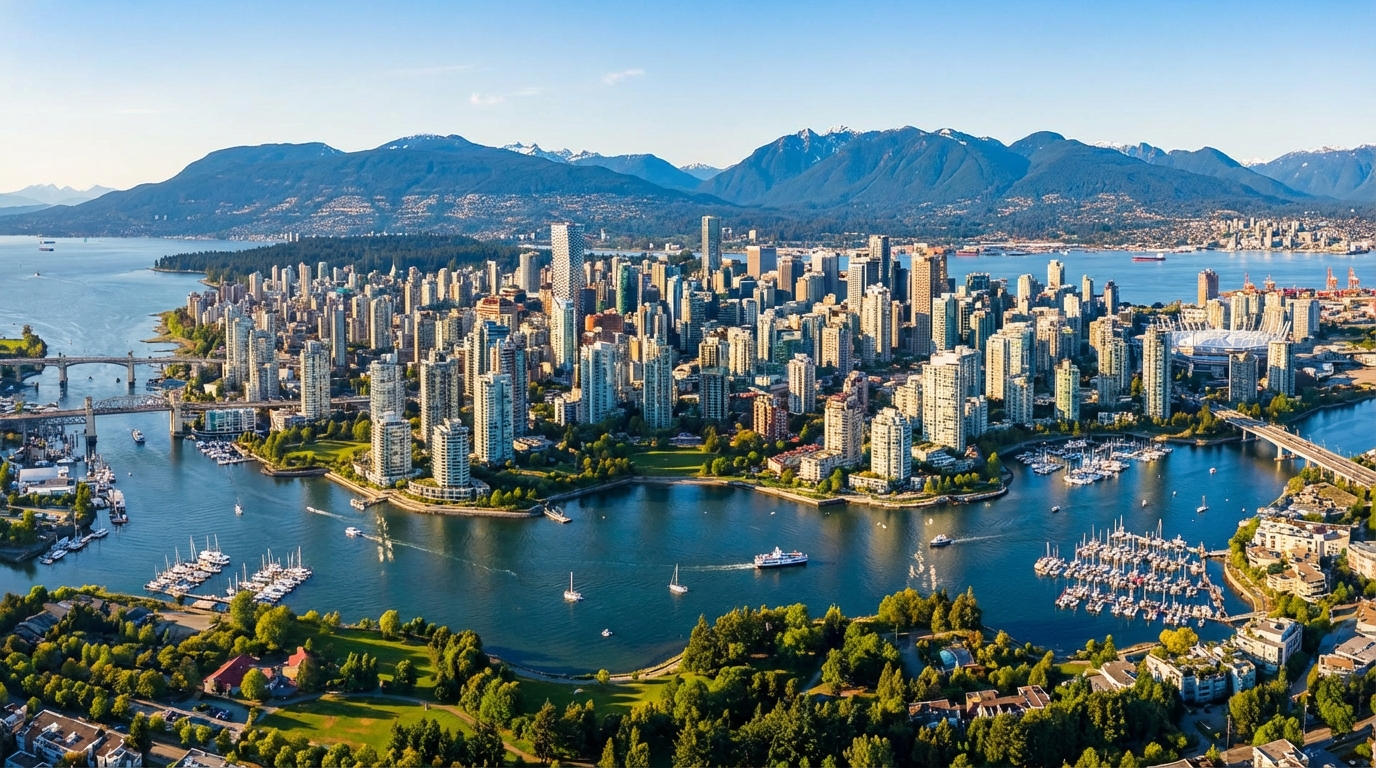
Aerial view of Vancouver with downtown, mountains, and ocean

Choosing the Right Neighborhood for Your Family

Moving to Vancouver with young children requires careful consideration of schools, outdoor spaces, community amenities, and neighborhood character. This comprehensive guide examines each major area to help you make an informed decision about where to plant your family's roots in one of Canada's most beautiful cities.

Vancouver's neighborhoods are remarkably diverse, each offering distinct advantages for families. From the affluent, mountain-backed communities of West Vancouver to the urban vibrancy of Vancouver's Westside neighborhoods and the outdoor recreation paradise of North Vancouver, your choice will significantly impact your family's daily life, children's education, and overall quality of life.

The Greater Vancouver area is consistently ranked among the world's most liveable cities, and for families with young children, this reputation is well-deserved. The region offers excellent public schools, extensive park systems, low crime rates, diverse communities, and a lifestyle that emphasizes outdoor activity and environmental consciousness. However, it's also one of the most expensive real estate markets in North America, which makes choosing the right neighborhood even more critical.

Throughout this guide, we'll examine each neighborhood through the lens of what matters most to families: educational opportunities, recreational facilities, safety statistics, community demographics, housing costs, and the intangible "family-friendliness" that makes a neighborhood feel like home. We'll cover the independent municipalities of West Vancouver and North Vancouver in detail, as these North Shore communities are particularly popular with families, along with the diverse neighborhoods within the City of Vancouver itself.

What Makes a Great Family Neighborhood?

When evaluating neighborhoods for your family, consider these key factors: proximity to highly-rated schools, abundance of parks and playgrounds, walkability and bike-friendliness, access to family-oriented amenities (libraries, recreation centers, swimming pools), low crime rates, presence of other young families, community programming for children, and commute times to work. The best neighborhood for your family balances these factors with your budget and lifestyle preferences.

West Vancouver

Prestigious, scenic, and family-oriented—exploring the North Shore's most affluent municipality

West Vancouver Overview

British Columbia's wealthiest municipality with exceptional schools and stunning natural beauty

Family-friendly residential street in West Vancouver

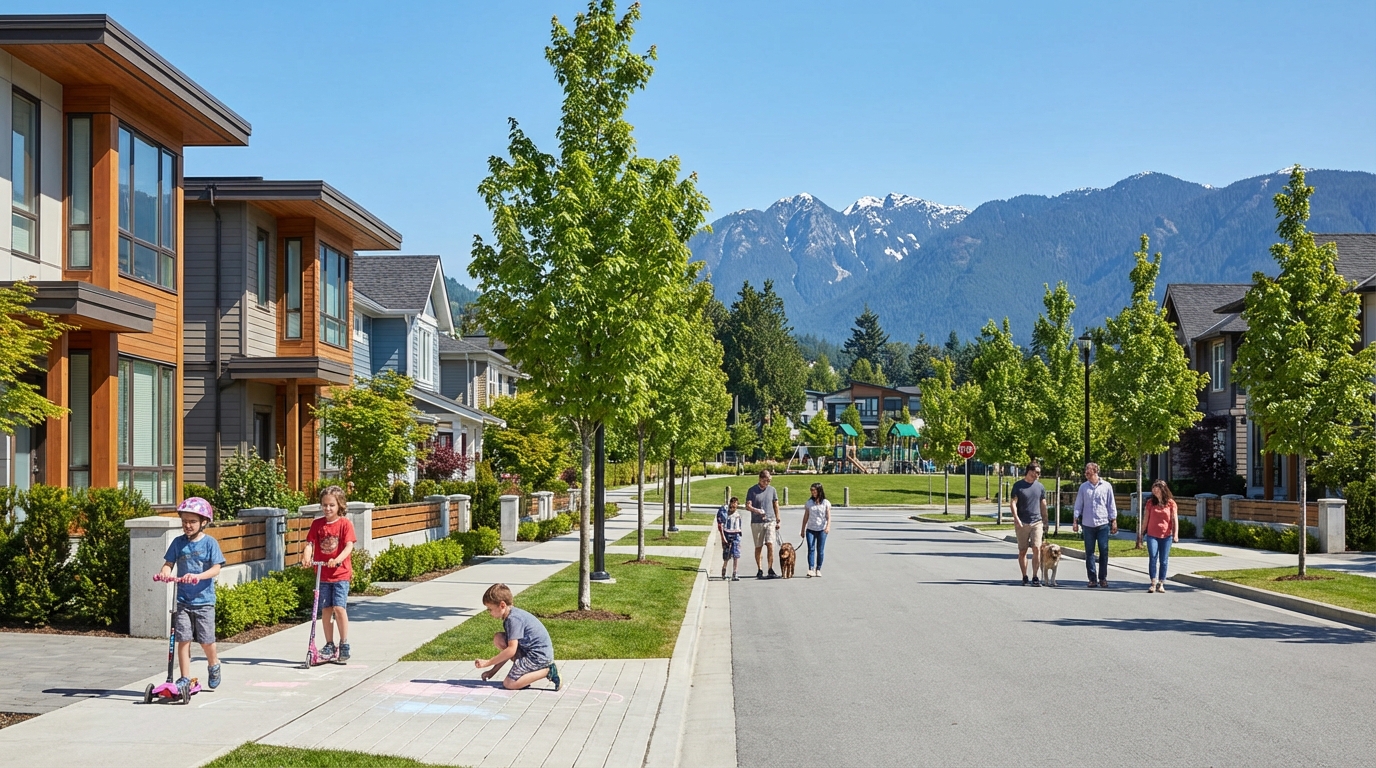
West Vancouver is a separate municipality from the City of Vancouver, located on the North Shore of Burrard Inlet. It's consistently ranked as one of Canada's wealthiest communities and offers families an exceptional quality of life characterized by large lots, mature trees, mountain views, waterfront access, and some of the highest-performing schools in British Columbia.

For families with young children, West Vancouver presents a compelling package: outstanding public schools that consistently rank among the province's best, extremely low crime rates, beautiful parks and beaches, excellent recreation facilities, and a strong sense of community. The municipality has invested heavily in family amenities, including modern community centers, well-maintained playgrounds, extensive trail networks, and year-round programming for children.

The trade-off for these advantages is clear: West Vancouver has the highest real estate prices in the region. Single-family homes typically start well above $2 million, with waterfront and British Properties homes often exceeding $5-10 million. However, townhouses and condominiums offer more accessible entry points, and many families consider the investment worthwhile for the educational and lifestyle benefits.

Schools and Education

West Vancouver Schools (SD45) is widely regarded as British Columbia's premier school district. The district consistently achieves top rankings in the Fraser Institute's annual school rankings, with multiple elementary and secondary schools placing in the province's top 10. This academic excellence stems from well-funded programs, engaged parents, experienced teachers, and a student population that generally comes from educated, affluent families.

The district operates 14 elementary schools and 3 secondary schools serving approximately 6,500 students. Class sizes are generally smaller than provincial averages, and the district offers robust programming in arts, athletics, French immersion, and academic enrichment. Parent involvement is exceptionally high, with active PACs (Parent Advisory Councils) supporting everything from classroom supplies to major facility improvements.

Top-performing elementary schools include:

  • Westcot Elementary: Located in the Ambleside area, Westcot consistently ranks among BC's top elementary schools with strong academics and a nurturing environment for younger learners.
  • Hollyburn Elementary: Known for excellent test scores, strong arts programs, and a committed parent community.
  • Chartwell Elementary: Offers both English and French Immersion programs with outstanding academic results.
  • Gleneagles Elementary: Serves the British Properties with modern facilities and consistently high performance.
  • Caulfeild Elementary: A smaller school in the southern area with a tight-knit community feel and excellent academics.

Beyond academics, West Vancouver schools emphasize environmental education, taking advantage of the surrounding forests, mountains, and ocean. Many schools have outdoor learning programs, and students regularly engage in hiking, skiing, and marine education as part of their curriculum.

Student-Teacher Ratio

Approximately 15:1 (better than provincial average)

School Rankings

Multiple schools in BC's top 20

French Immersion

Available at multiple schools

Special Programs

Arts, athletics, outdoor education

Parks, Recreation and Outdoor Activities

West Vancouver's natural environment is one of its greatest assets for families. The municipality boasts over 2,300 acres of parkland, including everything from neighbourhood tot lots to vast wilderness areas. The combination of ocean beaches, forested trails, and mountain recreation within a single municipality is virtually unmatched in urban Canada.

Major family-friendly parks and recreation areas:

  • Ambleside Park: A 24-acre waterfront park with playground, spray park, beach, sports fields, and the iconic Ambleside Pier. This is the heart of family recreation in West Vancouver.
  • Dundarave Park: Beachfront park with playground, picnic areas, and calm waters ideal for young children learning to swim.
  • John Lawson Park: Features the Millennium Celebration Playground, one of the area's largest and most creative play structures, plus beach access.
  • Cypress Provincial Park: Provides year-round mountain recreation including skiing, snowboarding, snowshoeing in winter and hiking, mountain biking in summer—all within 30 minutes of residential areas.
  • Lighthouse Park: Old-growth forest with walking trails suitable for families and dramatic ocean views.
  • Whytecliff Park: Marine sanctuary with tidepools, diving, and gentle hiking trails.

The West Vancouver Community Centre and Seniors' Centre offers extensive programming for children including swimming lessons, gymnastics, martial arts, dance, arts and crafts, and sports camps. The facility includes an Olympic-sized pool, fitness facilities, ice rink, and numerous program rooms. West Vancouver Memorial Library provides excellent children's programming including story times, STEAM activities, and summer reading clubs.

For active families, the extensive trail network provides opportunities for hiking, mountain biking, and trail running right from your doorstep. Many families incorporate outdoor activity into daily life, with children learning to ski at Cypress in winter and exploring forest trails year-round.

Safety and Crime Rates

West Vancouver consistently reports some of the lowest crime rates in Metro Vancouver and across Canada. The West Vancouver Police Department serves a population of approximately 44,000 and reports significantly lower rates of both property crime and violent crime compared to provincial and national averages. For families, this translates to a strong sense of security—children can play in parks unsupervised, families walk neighborhoods in the evening, and property crime is minimal.

The community's low crime rates stem from several factors: affluence (reducing economically-motivated crime), strong community cohesion, active neighborhood watch programs, and well-funded policing. The municipality has invested in community policing initiatives that build relationships between officers and residents, particularly in schools where RCMP officers serve as resource officers.

Crime Severity Index

Significantly below BC average

Violent Crime Rate

Among lowest in Metro Vancouver

Property Crime

Low, primarily minor theft

Community Policing

Strong presence and engagement

Demographics and Community Vibe

West Vancouver's demographic profile is characterized by high household incomes, high educational attainment, and a significant population of families with school-age children. The median household income exceeds $120,000, with many households substantially higher. The population is well-educated, with over 50% of adults holding university degrees.

The community is culturally diverse, with significant Asian, European, and Middle Eastern populations alongside Anglo-Canadian families. This diversity is particularly evident in schools, where children benefit from multicultural exposure. Many families are drawn to West Vancouver specifically for educational opportunities, either relocating from other parts of Canada or internationally.

The vibe is decidedly family-oriented and community-minded, though noticeably affluent. You'll see families at farmers markets, children's sports leagues are well-attended, and community events draw strong participation. The pace is generally more relaxed than urban Vancouver, with emphasis on outdoor lifestyle and family time. However, the wealth disparity can be notable—expect to see luxury vehicles, expensive homes, and a generally high standard of living that may feel exclusionary to some.

West Vancouver has an aging population, with many long-time residents who raised families here now in retirement. This provides intergenerational stability but also means fewer rental properties and limited housing stock for young families just starting out.

Neighborhood Sub-Areas Within West Vancouver

Ambleside: The most urban and walkable part of West Vancouver, centered around Marine Drive. Excellent for families wanting village-like walkability with shops, restaurants, and services. Close to Ambleside Park and several top elementary schools. More condos and townhouses make it relatively more accessible price-wise.

Dundarave: Similar to Ambleside with a charming village center along Marine Drive, beautiful beach park, and strong elementary school. Quintessential West Vancouver neighborhood with character homes and mature trees.

British Properties: Prestigious hillside neighborhood with larger lots, spectacular views, and some of West Vancouver's most expensive homes. Excellent schools and very family-friendly, but requires driving for most amenities. Popular with established professional families.

Caulfeild: Southern area known for estate properties, mature landscapes, and proximity to Lighthouse Park. Quieter and more secluded, ideal for families wanting maximum privacy and nature access.

Horseshoe Bay: Village at the western edge with its own commercial district, marina, and BC Ferries terminal. More laid-back atmosphere, strong sense of community, and spectacular water views. Slightly more affordable than central West Vancouver.

Pros for Families
  • Exceptional public schools with top provincial rankings
  • Extremely safe with very low crime rates
  • Abundant parks, beaches, and outdoor recreation
  • Strong sense of community and family-orientation
  • Excellent community facilities and programming
  • Beautiful natural setting with mountain and ocean access
  • High walkability in village areas
Considerations
  • Highest real estate prices in Metro Vancouver
  • Limited rental housing availability
  • Commute to downtown Vancouver (30-45 min)
  • Can feel homogeneous and affluent
  • Bridge traffic during rush hours
  • Limited diversity in housing types
  • Fewer dining and entertainment options than urban areas

Best For

Established families seeking top-tier education in a safe, nature-rich environment who can afford premium real estate prices. Ideal for families prioritizing school quality and outdoor lifestyle over urban amenities and diversity. Particularly suited to families with elementary-age children who will benefit from the exceptional school system and safe neighborhood streets.
North Vancouver

Mountain recreation meets family-friendly communities across the City and District of North Vancouver

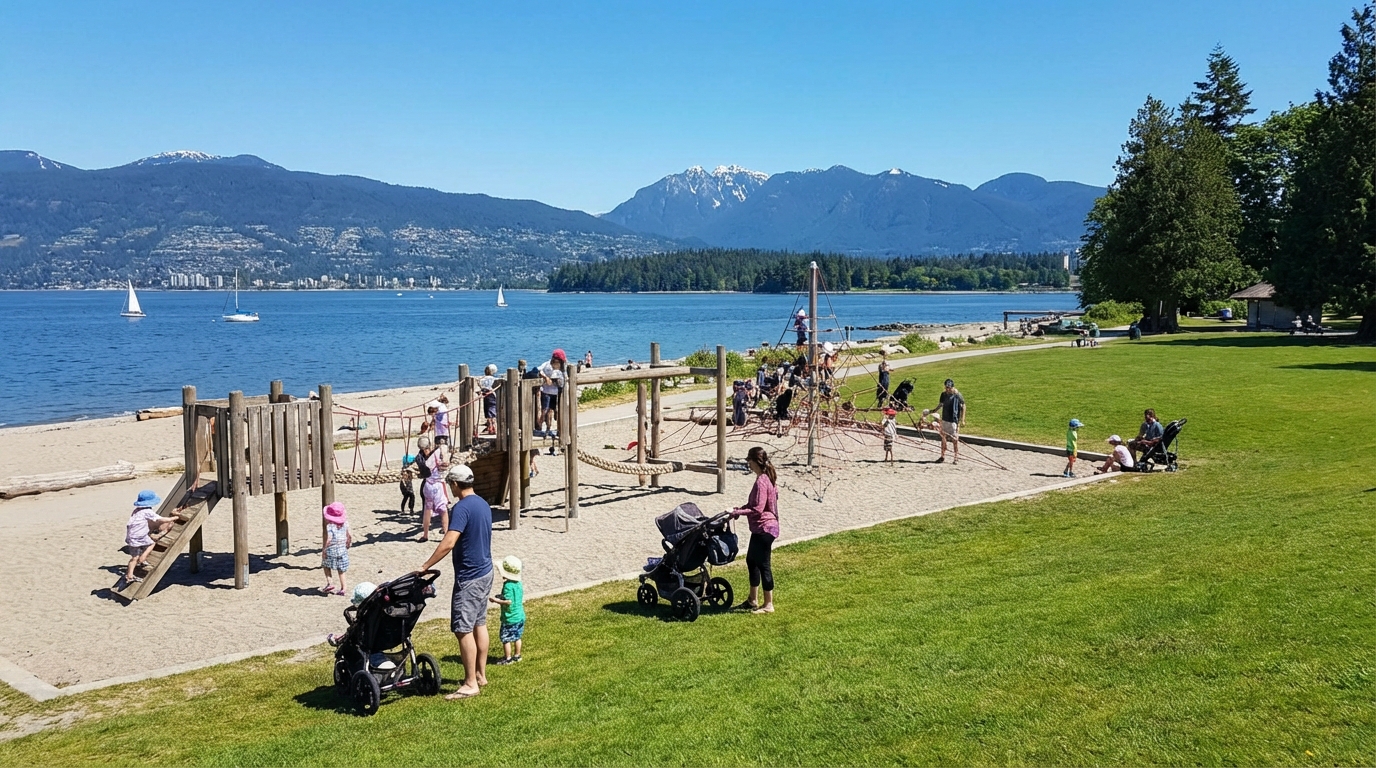
Waterfront park in North Vancouver with playground and families

Understanding North Vancouver's Geography

North Vancouver is actually two separate municipalities: the City of North Vancouver (a smaller, more urban area) and the District of North Vancouver (a larger, more suburban area that surrounds the City on three sides). Both offer excellent family environments but with distinct characters.

Together, these two municipalities are home to approximately 140,000 residents and offer a compelling middle ground between West Vancouver's premium pricing and Vancouver's urban density. North Vancouver provides excellent schools, abundant recreation, strong community services, and that coveted North Shore mountain lifestyle at more accessible price points than West Vancouver, though still expensive by national standards.

The North Shore mountains are literally in your backyard—many neighborhoods have direct trail access, and the famous ski mountains (Grouse, Cypress, and Seymour) are within 20 minutes. For active families, this proximity to wilderness recreation while maintaining urban convenience is North Vancouver's greatest appeal.

City of North Vancouver (CNV)

The North Shore's most walkable and urban family community

The City of North Vancouver is a compact, increasingly urban municipality of about 57,000 residents covering just 4.8 square miles. It's bounded by Burrard Inlet to the south and surrounded by the District of North Vancouver to the north, east, and west. For families, the City offers the best transit connections on the North Shore, the most walkable neighborhoods, growing urban amenities, and an increasingly diverse population.

The Lower Lonsdale area has undergone dramatic transformation in recent years, evolving from an industrial waterfront to a vibrant urban neighborhood with restaurants, breweries, shops, and substantial new residential development. This revitalization has made the City increasingly attractive to young families seeking urban convenience with North Shore nature access.

Schools in the City of North Vancouver

The City of North Vancouver is part of School District 44 (North Vancouver), which also serves the District. SD44 is a high-performing district with schools that consistently rank well provincially, though generally below West Vancouver's schools. The district serves approximately 15,000 students across 25 elementary schools and 6 secondary schools.

Notable elementary schools in the City:

  • Queen Mary Elementary: One of the highest-ranked schools in SD44, located in the Central Lonsdale area with strong academics and engaged parent community.
  • Westview Elementary: Well-regarded school in the Upper Lonsdale area with good Fraser Institute rankings and solid programs.
  • Ridgeway Elementary: Popular school serving the eastern part of the City with strong community connections.
  • Lynnwood Elementary: Offers French Immersion program alongside English stream.

Secondary students typically attend Sutherland Secondary (in the City) or Carson Graham Secondary (in the District). Both are solid schools with good academic programs, though they rank below West Vancouver secondary schools in Fraser Institute rankings.

Parks and Recreation in the City

Despite its small geographic size, the City of North Vancouver provides excellent parks and recreation facilities. The waterfront has been transformed with the Shipyards District, featuring a public plaza, skating rink, pier, playground, and maritime-themed attractions. On summer weekends, the Shipyards hosts festivals, markets, and family events that draw thousands.

  • Waterfront Park and Shipyards: Modern urban waterfront with playground, spray park, skating rink, and ocean views. The Shipyards Night Market runs summer evenings.
  • Mahon Park: Large Central Lonsdale park with sports fields, playground, pool, and community center offering extensive children's programming.
  • Maplewood Flats: Unique coastal conservation area perfect for nature education with young children—bird watching, gentle trails, and tidal mud flats.
  • Heywood Park: Neighbourhood park with playground and spray park, popular with families.
  • Mosquito Creek: Trail network through urban forest, perfect for family walks and nature exploration.

The City's Recreation and Culture division operates multiple community centers with swimming pools, ice rinks, fitness facilities, and extensive programming for children. The Ron Andrews Community Recreation Centre and the North Vancouver Recreation & Culture Commission facilities offer everything from swimming lessons to art classes to sports leagues.

Key Neighborhoods Within the City

Lower Lonsdale: The most urban and walkable area, centered around Lonsdale Avenue from the waterfront to about 3rd Street. Experiencing rapid densification with new condos and townhomes. Excellent for families wanting car-optional lifestyle with SeaBus access to downtown Vancouver. Increasingly trendy with young professionals and families. Close to Shipyards, shops, restaurants. Schools include St. Edmund's Elementary (private Catholic) and students typically attend nearby elementary schools.

Central Lonsdale: The heart of the City, running from about 3rd to 20th streets along Lonsdale. Mix of older single-family homes, low-rise apartments, and new developments. Good walkability, urban convenience, and access to Mahon Park. Home to Queen Mary Elementary, one of the district's top schools. More affordable than West Vancouver or parts of the District.

Upper Lonsdale: Hillside residential area from about 20th Street north, featuring mostly single-family homes with mountain and city views. More suburban feel than Lower/Central Lonsdale but still relatively walkable to amenities. Close to good elementary schools (Westview, Ridgeway) and community parks. Popular with established families.

Moodyville/Lynnmour: Eastern area of the City, more industrial historically but seeing residential development. Close to Maplewood Flats and good trail access. More affordable, though fewer amenities within walking distance. Served by Ridgeway and Lynnwood Elementary schools.

Safety in the City of North Vancouver

The City of North Vancouver has moderate crime rates—higher than West Vancouver but comparable to or better than many Vancouver neighborhoods. As a more urban area with greater socioeconomic diversity, property crime exists (primarily vehicle break-ins and bike theft) but violent crime remains low. Most family-oriented residential areas are very safe, and parents generally feel comfortable with children playing in parks and walking to school.

The RCMP North Vancouver detachment serves both the City and District with dedicated community policing programs and school liaison officers. Overall, families report feeling safe, though basic urban precautions (locking cars, securing bikes, home security) are advisable.

Pros for Families
  • Best North Shore transit (SeaBus, frequent buses)
  • Most walkable North Shore neighborhoods
  • Growing urban amenities and services
  • More affordable than West Vancouver
  • Good schools with strong programming
  • Excellent waterfront parks and recreation
  • Diverse community with range of incomes
  • Quick access to downtown Vancouver (12-min SeaBus)
Considerations
  • Schools rank below West Vancouver's
  • Higher density with significant condo development
  • More urban traffic and noise than District
  • Property crime higher than West Vancouver
  • Limited single-family home inventory
  • Some areas undergoing rapid change/construction
  • Parking can be challenging in dense areas

Best For

Families seeking North Shore lifestyle with urban convenience and transit access. Ideal for those who want to minimize car dependence, need downtown commute access, and prefer walkable neighborhoods. Best suited to families comfortable with higher-density living (townhomes, condos) or willing to pay premium prices for single-family homes. Great choice for active families who want mountain recreation without sacrificing urban amenities.

District of North Vancouver (DNV)

Spacious suburban living with direct mountain access and excellent family amenities

The District of North Vancouver is a much larger municipality (61 square miles) serving about 88,000 residents. It encompasses everything from suburban residential neighborhoods to vast wilderness areas, including Mount Seymour Provincial Park. The District offers families more space, quieter neighborhoods, direct mountain recreation access, and strong schools—essentially suburban family living with dramatic natural surroundings.

The District's eastern areas (Deep Cove, Seymour) feel distinctly different from its western areas (Lynn Valley, Norgate)—there's significant variation in character across this geographically large municipality. What unites these areas is abundance of green space, family-oriented community planning, and that North Shore outdoor lifestyle.

Schools in the District of North Vancouver

The District's schools, part of SD44 alongside City schools, include some of the North Shore's highest-performing and most sought-after institutions. The District has invested significantly in school facilities, with several schools recently renovated or rebuilt. Many District schools offer French Immersion programs, giving families language education options.

Top elementary schools in the District:

  • Upper Lynn Elementary: Consistently ranks as one of BC's top elementary schools. Located in Lynn Valley, it draws families specifically seeking this highly-regarded program.
  • Westover Elementary: High-performing school serving the Edgemont area with excellent Fraser Institute rankings and strong community support.
  • Braemar Elementary: Well-regarded school in the Deep Cove area with outdoor education focus and tight-knit community.
  • Blueridge Elementary: Popular school in the Blueridge neighbourhood with strong academics and modern facilities.
  • Montroyal Elementary: Serves the Capilano Highlands area with good ratings and engaged parent community.
  • Highlands Elementary: Located in the Upper Delbrook area, consistently well-ranked with strong programs.
  • Dorothy Lynas Elementary: Serves the Seymour area with focus on outdoor learning given proximity to wilderness.

For secondary education, Carson Graham Secondary and Seycove Secondary are the District's main public high schools, both offering solid academic programs and good athletics. Argyle Secondary (in the City) also serves some District families. While these schools rank below West Vancouver's Sentinel Secondary, they provide good education with strong AP programs, athletics, and arts.

Parks, Trails and Mountain Recreation

The District of North Vancouver is an outdoor recreation paradise for families. The municipality maintains over 150 parks and green spaces, plus hundreds of kilometers of trails through forests and mountains. For families raising outdoor-oriented children, this access is transformative—kids can grow up hiking, skiing, mountain biking, and exploring nature as part of regular life.

Major family recreation areas:

  • Lynn Canyon Park: Features the famous suspension bridge (free, unlike the tourist-oriented Capilano Suspension Bridge), swimming holes, waterfalls, and extensive trail network. A District of North Vancouver treasure.
  • Mount Seymour Provincial Park: Year-round recreation including skiing, snowboarding, snowshoeing, and sledding in winter; hiking and trail running in summer. Close enough for after-school skiing.
  • Deep Cove: Picturesque waterfront village with kayaking, paddleboarding, small beach, and hiking trails including the popular Quarry Rock trail. Ice cream shops and cafes make it perfect for family outings.
  • Myrtle Park: Lynn Valley community park with playground, spray park, sports fields, and access to Lynn Creek trails.
  • Murdo Frazer Park: Windsor Park neighbourhood park with great playground and family facilities.
  • Panorama Park: Stunning viewpoint over Deep Cove with playground and picnic areas.
  • Inter River Park: Natural area with trails suitable for young children and forest exploration.

The District operates excellent recreation facilities including the Harry Jerome Recreation Centre (with Olympic-quality track and field facilities), multiple community centers, ice rinks, and pools. Programming for children is extensive, from swimming lessons to rock climbing to skateboard camps. Many programs incorporate the natural environment, teaching children wilderness skills, environmental stewardship, and outdoor recreation.

Key Neighborhoods Within the District

Lynn Valley: The District's commercial and community heart, centered around Lynn Valley Village. Excellent walkability by District standards, with grocery stores, shops, cafes, library, and services. Close to Lynn Canyon Park and excellent schools including Upper Lynn Elementary. Very popular with families. Good mix of housing types from condos to large single-family homes. Strong community identity.

Edgemont Village: Upscale neighbourhood in the western District, bordering West Vancouver. Features a charming village center with shops and restaurants. Large lots, excellent schools (Westover Elementary, nearby Sentinel Secondary), and prestigious atmosphere. More expensive, rivaling West Vancouver pricing in some areas. Popular with established professional families.

Deep Cove: Unique waterfront community at the District's eastern edge, centered around the scenic Deep Cove harbour. Remote feel (30-40 minute drive to downtown Vancouver) but exceptional outdoor recreation access and very strong community identity. Excellent for families prioritizing nature access and community over urban convenience. Braemar Elementary serves the area. Can feel isolated but residents love the village atmosphere.

Seymour: The area at the base of Mount Seymour, including neighbourhoods like Blueridge and Seymour Heights. Direct mountain access, quieter and more spacious than Lynn Valley. Good schools and parks, though more car-dependent. Ideal for families who want maximum nature proximity and don't mind being further from urban amenities.

Windsor Park/Upper Delbrook: Central District neighbourhoods with mix of older and newer homes on decent-sized lots. Less expensive than Edgemont or some Lynn Valley areas. Good schools (Highlands Elementary) and parks. Family-friendly and practical without the premium price tag.

Capilano Highlands: Hillside area with views, larger properties, and peaceful atmosphere. Close to Capilano Suspension Bridge and Cleveland Dam. More expensive, popular with families seeking space and nature. Montroyal Elementary serves the area.

Norgate: Western edge of the District, bordering the City. More affordable, good transit access, close to Capilano University. Mix of older homes and newer developments. Less "North Shore suburban" feel but good value for families needing affordability.

Safety in the District of North Vancouver

The District of North Vancouver has low crime rates, similar to or better than the City of North Vancouver and substantially better than Vancouver proper. The suburban, family-oriented character of most neighbourhoods contributes to safety—strong community connections, high home ownership rates, and neighbourhood watch programs. Parents generally feel very comfortable with children playing outside, walking to school, and exploring local trails.

Property crime exists (mainly vehicle break-ins at trailheads) but violent crime is rare. Deep Cove and Seymour areas in particular report very low crime. Overall, the District provides the safe, suburban family environment many parents seek.

Population

~88,000 residents

Area

61 square miles (includes vast park areas)

Median Home Price

$1.5-2.5M (varies widely by area)

Average Commute

30-45 min to downtown Vancouver

Pros for Families
  • Excellent schools including top-ranked options
  • Abundant nature and outdoor recreation access
  • Safe, family-oriented neighbourhoods
  • More spacious properties than City
  • Strong community centers and programming
  • Mix of areas from affordable to upscale
  • Extensive trail networks and parks
  • Good for outdoor-oriented families
Considerations
  • Limited transit (car-dependent lifestyle)
  • Longer commutes to downtown Vancouver
  • Some areas quite remote (Deep Cove)
  • High real estate prices, especially Edgemont
  • Fewer urban amenities than City
  • Limited walkability except village areas
  • Bridge traffic during commute times

Best For

Families seeking suburban lifestyle with maximum outdoor recreation access. Ideal for those wanting space, nature, and strong schools who don't mind car-dependency. Perfect for outdoor-oriented families who want kids to grow up skiing, hiking, and playing in forests. Best suited to families with flexible work arrangements or tolerance for longer commutes. Excellent choice if schools, safety, and outdoor lifestyle are top priorities and you want more space than the City offers.

Vancouver Westside Neighborhoods

From beach culture to university town—exploring family-friendly communities south of False Creek

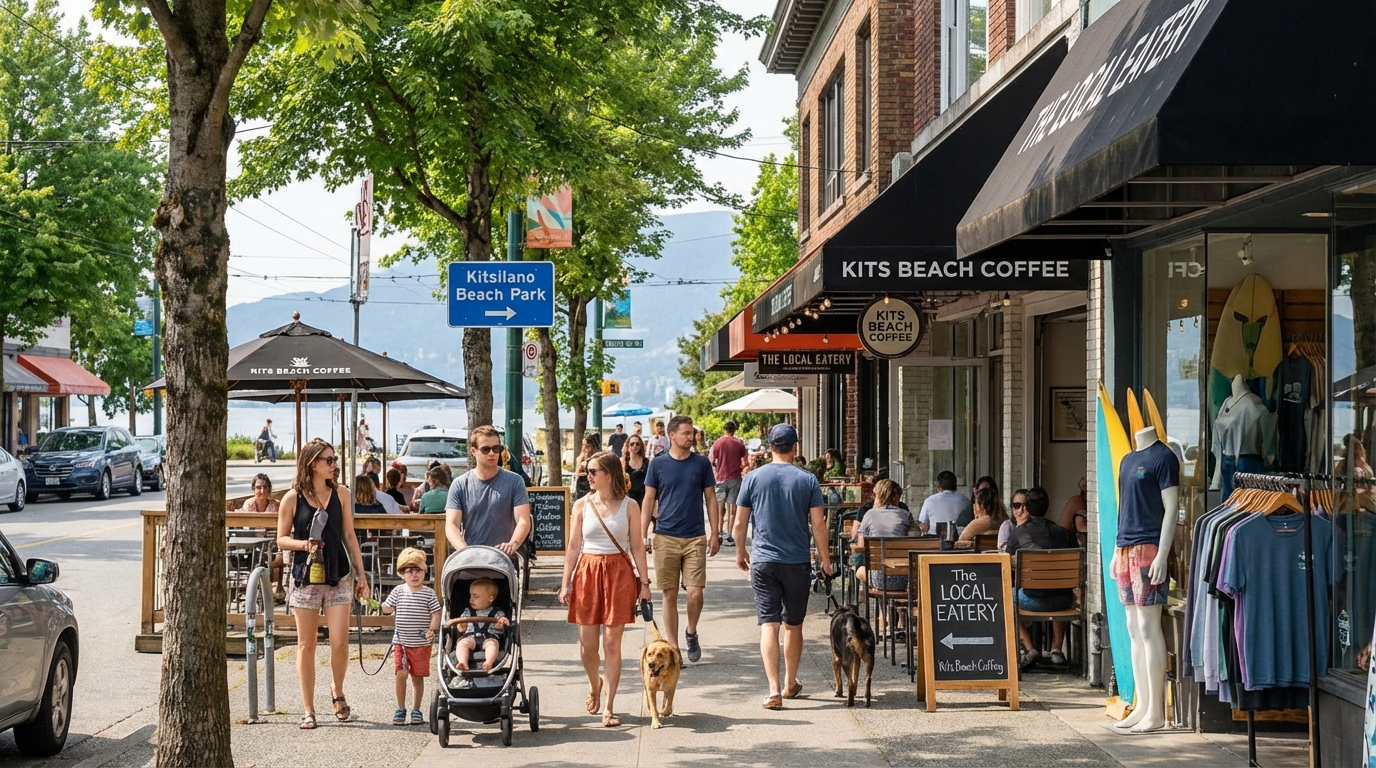
Kitsilano neighborhood street with shops and families

Vancouver's Westside: Urban Living with Family Appeal

The City of Vancouver's Westside (generally everything south of False Creek and west of Main Street) encompasses some of Metro Vancouver's most desirable family neighborhoods. These areas combine urban convenience, good schools, parks, beaches, and distinct neighborhood characters—all without the North Shore commute.

Vancouver's Westside neighborhoods offer families urban living with village-like communities. You can walk to cafes, shops, and restaurants; access excellent parks and beaches; send children to good schools; and enjoy cultural diversity—all while avoiding bridge commutes. The trade-off is higher density (more townhomes and condos, smaller yards), higher prices than the North Shore in some areas, and a more urban atmosphere.

The Vancouver School Board (VSB) operates all public schools in Vancouver. While the VSB has faced budget challenges and governance issues in recent years, many individual schools maintain strong programs and dedicated teachers. School quality varies significantly—researching specific schools in your catchment area is essential.

Kitsilano

Beach culture meets family life in Vancouver's iconic Westside neighborhood

Kitsilano ("Kits" to locals) is Vancouver's quintessential beach neighborhood, stretching from False Creek to West 16th Avenue and from Burrard Street to Alma Street. Known for its active, health-conscious culture, Kits offers families beautiful beaches, excellent parks, good schools, and a vibrant commercial district along West 4th Avenue and West Broadway. The neighborhood successfully balances family-friendliness with young professional energy.

Schools and Education

  • Bayview Elementary: Well-regarded elementary school near Vanier Park with good academic reputation and engaged parent community.
  • Kitsilano Secondary: Popular high school with good academics, strong arts programs, and waterfront location. One of Vancouver's better secondary schools.
  • Henry Hudson Elementary: Serves the western Kits area near Kits Beach with solid programs.
  • Carnarvon Elementary: Located in the north part of the neighborhood with French Immersion option.

Parks and Recreation

  • Kitsilano Beach: Vancouver's most popular beach with playground, basketball courts, beach volleyball, huge salt-water pool (Kitsilano Pool), and endless summer activities. The heart of Kits family life in summer.
  • Vanier Park: Large waterfront park with Museum of Vancouver, Maritime Museum, and Planetarium. Great for kite flying, picnics, and outdoor play.
  • Connaught Park: Interior neighborhood park with playground and sports facilities.
  • Kitsilano Community Centre: Offers extensive programming for children including sports, arts, and camps.

Family Life in Kitsilano

Kits attracts active, educated families who want urban convenience with outdoor lifestyle. The neighborhood is very walkable and bikeable—families can run daily errands, access schools, and reach the beach without driving. West 4th Avenue offers shops, cafes, restaurants, and services. The community has strong yoga and wellness culture, organic food focus, and environmentally-conscious values.

Housing is expensive—single-family homes typically exceed $3 million, though townhouses and condos offer more accessible entry. The neighborhood has seen significant densification with new condo development, particularly along major streets. Yards are generally small, but beach and park access compensate.

Demographics skew educated and affluent, with mix of young professionals, young families, and long-time residents. The neighborhood is culturally diverse though predominantly white. Community vibe is active, progressive, and family-friendly while maintaining the "cool" factor that defined Kits historically.

Pros for Families
  • Exceptional beach and waterfront access
  • Highly walkable and bikeable
  • Good schools, especially Kitsilano Secondary
  • Vibrant commercial districts with amenities
  • Active, health-conscious community
  • No bridge commute to downtown
  • Strong community programming
Considerations
  • Very expensive real estate
  • Small yards, higher density
  • Parking can be challenging
  • Summer beach crowds
  • Limited large parks beyond beach
  • Can feel trendy/homogeneous

Point Grey and Dunbar

Established, leafy neighborhoods with excellent schools and strong family orientation

Point Grey and Dunbar, located in Vancouver's far west, represent some of the city's most established and family-oriented neighborhoods. Point Grey encompasses the area around UBC and includes neighborhoods like Dunbar-Southlands, University Endowment Lands, and the residential areas near Spanish Banks. These neighborhoods offer quiet, tree-lined streets, excellent schools, large parks, and a decidedly suburban feel despite being within Vancouver city limits.

Schools—Among Vancouver's Best

The Point Grey and Dunbar areas are home to some of Vancouver School Board's highest-performing schools, which significantly drives real estate demand:

  • Queen Elizabeth Elementary: Consistently ranks as one of BC's top elementary schools. Located in the Dunbar area, it draws families from across Vancouver through school choice. Exceptional academics, engaged parents, and strong programs.
  • Lord Tennyson Elementary: Another high-performing elementary school in the Dunbar area with excellent reputation.
  • Queen Mary Elementary (different from North Van's): Well-regarded school serving the Kerrisdale-adjacent area.
  • University Hill Elementary: Located near UBC, benefits from university proximity and academic community.
  • Lord Byng Secondary: One of Vancouver's most sought-after high schools with strong academics, excellent university preparation, and good athletics. Draws families specifically seeking this school.
  • Point Grey Secondary: Also highly regarded with strong academic programs.

The school quality in this area is a primary reason families accept high housing costs—access to these schools through catchment boundaries is highly valued.

Parks and Recreation

  • Pacific Spirit Regional Park: Massive urban forest (1,900 acres) with 73 km of trails for walking, running, and cycling. Extraordinary nature access within city limits.
  • Spanish Banks: Beautiful, less-crowded beaches with shallow water ideal for young children. Spectacular sunset views.
  • Jericho Beach: Family-friendly beach with playground, sailing center, and park space.
  • Dunbar Community Centre: Offers extensive children's programming including preschool, sports, arts, and camps.
  • Memorial South Park: Neighbourhood park with baseball diamonds and green space in the heart of Dunbar.

Family Life and Character

Point Grey and Dunbar are quintessentially family-oriented with quiet, safe streets where children bike to school and play in yards. The neighborhoods have substantial Asian population (particularly Chinese and Korean families drawn by school reputation) alongside established Anglo-Canadian families. The demographic profile is educated, affluent, and focused on children's education and enrichment.

The Dunbar commercial district along Dunbar Street provides neighborhood shops, cafes, restaurants, and services with easy parking—more car-oriented than Kitsilano but still walkable. The atmosphere is decidedly suburban despite being in Vancouver—you'll see minivans, soccer practices, and PTA meetings rather than nightlife and urban energy.

Housing is expensive, particularly in Point Grey where waterfront properties can exceed $10 million. However, the neighborhoods offer the largest yards on Vancouver's Westside, with many properties featuring substantial gardens, pools, and mature trees. For families wanting a house with a real yard while staying in Vancouver, this is the area.

School Quality

Among Vancouver's highest-ranked schools

Safety

Very low crime rates for Vancouver

Housing Type

Predominantly single-family homes

Home Prices

$2.5M - $10M+ for houses

Pros for Families
  • Best public schools in Vancouver
  • Very safe, family-oriented neighborhoods
  • Larger properties with yards
  • Quiet, suburban atmosphere
  • Access to Pacific Spirit Park
  • Beautiful beaches (Spanish Banks, Jericho)
  • Strong sense of community
  • Good local amenities in Dunbar village
Considerations
  • Very expensive real estate
  • Far from downtown (30-45 min commute)
  • Limited transit options
  • More car-dependent than central Vancouver
  • Can feel homogeneous and quiet
  • Limited nightlife or urban energy
  • Competitive school catchments

Best For

Families prioritizing school quality and suburban family environment within Vancouver. Ideal for those who can afford premium housing and want spacious properties, safe streets, and access to top public schools. Perfect for education-focused families who want yards and quiet neighborhoods but need to stay in Vancouver for work or lifestyle reasons. Particularly popular with Asian families seeking excellent education in an established community.

Kerrisdale

Traditional village atmosphere with upscale shops and strong family community

Kerrisdale is an affluent, established neighborhood centered around a charming commercial district at West 41st Avenue and West Boulevard. Known for its village-like character, tree-lined streets, and strong sense of community, Kerrisdale attracts families seeking traditional neighborhood living with urban convenience. The area has significant Asian population, particularly among families with school-age children.

Schools

  • Kerrisdale Elementary: Well-regarded school in the heart of the neighborhood with strong academics and engaged community.
  • Maple Grove Elementary: Offers French Immersion and English programs with good reputation.
  • Quilchena Elementary: Serves the eastern part of the neighborhood.
  • Magee Secondary: The local high school with solid academics and diverse student body.

While Kerrisdale's schools don't rank quite as high as Queen Elizabeth or Lord Byng, they're solid, well-supported schools that serve the community well.

Community and Lifestyle

Kerrisdale's commercial district is one of Vancouver's most pleasant, featuring quality shops, restaurants, cafes, a cinema, grocery stores, and services—all very walkable and with available parking. The neighborhood hosts a popular farmers market in summer and community events throughout the year. The atmosphere is upscale but welcoming, with a genuine village community feel rare in modern cities.

The neighborhood is very family-oriented, with stroller-pushing parents everywhere, children's stores, and family-friendly restaurants. Crime is low, streets are safe for children, and the community has strong neighborhood connections. Many families walk or bike to school and local amenities.

Housing consists primarily of single-family homes, many from the 1930s-1950s with character and larger lots. Teardowns and new builds are common as families update the housing stock. Prices are high ($2-4M typical for houses) but somewhat lower than Point Grey. Some newer townhome developments provide alternatives to single-family homes.

Pros for Families
  • Charming, walkable village center
  • Strong family community
  • Good schools with active parent involvement
  • Safe, quiet residential streets
  • Excellent local shops and restaurants
  • Traditional neighborhood character
  • Lower prices than Point Grey
Considerations
  • Still expensive real estate
  • Schools not as highly ranked as Point Grey area
  • Limited large parks
  • No beach access
  • 30+ minute commute to downtown
  • Quieter, more conservative atmosphere

South Granville and Shaughnessy

Vancouver's most prestigious addresses with heritage estates and cultural institutions

Shaughnessy is Vancouver's most exclusive residential neighborhood, characterized by heritage mansions, enormous lots, mature trees, and extreme wealth. While primarily known for expensive estates, the area includes some more accessible housing and excellent schools that attract families. South Granville, running north-south through the area, provides urban amenities and cultural attractions.

Schools

  • Shaughnessy Elementary: Well-regarded school serving the area with strong academics.
  • Prince of Wales Secondary: Mini-school programs and IB program attract students from across Vancouver.
  • Many families in Shaughnessy also choose private schools, with several prestigious options nearby.

Cultural and Family Amenities

The area is home to VanDusen Botanical Garden (perfect for family visits and children's programs), Queen Elizabeth Park (with Bloedel Conservatory, pitch and putt, and playgrounds), and excellent walkability along South Granville's shopping district. The neighborhood offers unique blend of residential quiet with access to cultural institutions and urban amenities.

For most young families, Shaughnessy proper (First Shaughnessy) is prohibitively expensive, with estates often $5-15M+. However, surrounding areas offer more accessible housing while maintaining proximity to the schools, parks, and cultural amenities. The neighborhood attracts extremely wealthy international families, established business families, and those who prioritize prestige and exclusivity.

Best For

Ultra-high-net-worth families seeking Vancouver's most prestigious address with heritage character, enormous properties, and proximity to cultural institutions. For most families, neighboring areas like Kerrisdale or Dunbar offer better value while maintaining access to similar school quality and amenities.

Vancouver Eastside Neighborhoods

More affordable family options with diverse communities and strong neighborhood identities

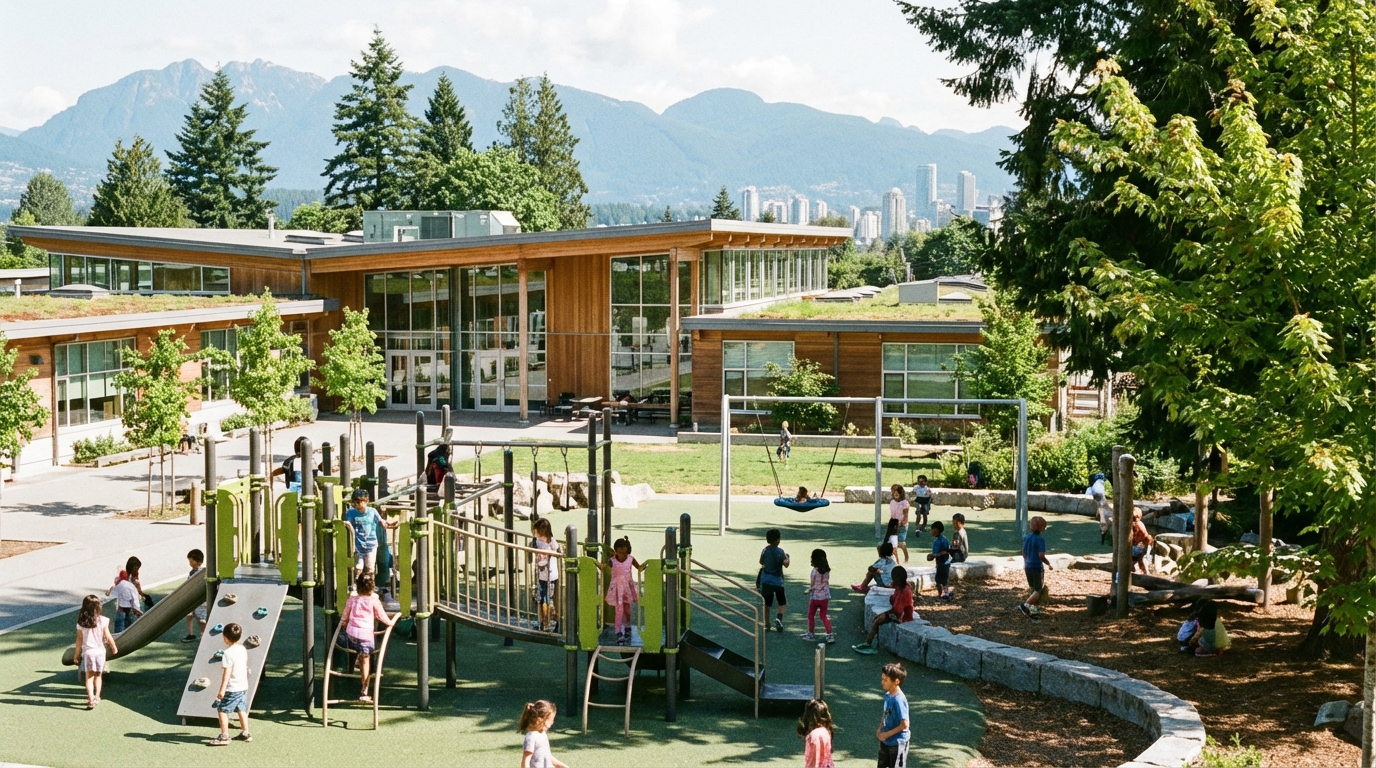
Elementary school playground in Vancouver with children

Vancouver's Eastside: Diversity, Affordability, and Community

East Vancouver (generally east of Main Street) has historically been Vancouver's more affordable, working-class side of the city. While rapid gentrification has increased prices significantly, East Van still offers more accessible housing than the Westside, along with diverse communities, strong neighborhood identities, and improving schools and amenities.

For families, East Vancouver presents a trade-off: lower housing costs and more authentic, diverse communities versus generally lower-ranked schools and higher crime rates than the Westside or North Shore. However, this is changing—families are increasingly choosing East Van for its character, community, and better housing affordability, while actively supporting their local schools.

Hastings-Sunrise

East Vancouver's family-friendly gem with strong community spirit

Hastings-Sunrise is one of East Vancouver's most family-friendly neighborhoods, bounded roughly by Nanaimo Street to the west, Boundary Road to the east, Burrard Inlet to the north, and Grandview Highway to the south. The area has experienced significant gentrification as young families discover its more affordable housing, good parks, and improving commercial districts.

Schools

  • Admiral Seymour Elementary: Well-regarded East Van school with engaged community and improving programs.
  • Franklin Elementary: Popular choice with families moving to the area.
  • Hastings Elementary: Community elementary with strong parent involvement.
  • Templeton Secondary: The local high school, working to improve its reputation and programs.

While these schools don't rank as highly as Westside schools in Fraser Institute rankings, many have dedicated teachers, improving facilities, and strong communities. Families who move here often become active in their school communities, helping drive improvement.

Parks and Family Amenities

  • Hastings Community Park: Large park with sports fields, playgrounds, spray park, and community center offering extensive children's programming.
  • Burrard View Park: Waterfront park with spectacular views, playgrounds, and beach access.
  • Windermere Park: Neighborhood park with playground and sports facilities.
  • Hastings Community Centre: Excellent facility with gym, ice rink, and youth programs.

Community and Housing

Hastings-Sunrise attracts young, progressive families seeking more affordable entry into Vancouver homeownership. The neighborhood has authentic community feel with block parties, active community centers, and engaged residents. The commercial district along Hastings Street is improving with new cafes, restaurants, and family-friendly businesses, though it still has grittier sections.

Housing includes character homes from the 1920s-1940s (many being renovated), new infill townhomes, and older low-rise apartments. Prices are significantly lower than the Westside—$1.5-2.5M for houses, with townhomes and condos under $1M. This affordability makes homeownership possible for middle-class families priced out of other areas.

The neighborhood is diverse with significant Asian, Indigenous, and various immigrant populations. It feels authentic and unpretentious compared to wealthier areas—more real Vancouver character, less polish, but genuine community.

Pros for Families
  • Much more affordable than Westside or North Shore
  • Strong community spirit and engagement
  • Good parks and recreation facilities
  • Improving commercial districts
  • Authentic, diverse community
  • Waterfront access at Burrard View
  • Active neighborhood associations
Considerations
  • Schools rank lower than Westside
  • Higher crime rates than Westside/North Shore
  • Some commercial areas still rough
  • Limited walkability compared to Kits
  • Fewer high-end amenities
  • Transit options more limited

Mount Pleasant and Riley Park

Hip, family-friendly neighborhoods with vibrant Main Street culture

Mount Pleasant (roughly east of Cambie to Main Street, between Broadway and 16th Avenue) and Riley Park (extending further east) are among East Vancouver's most gentrified neighborhoods. Main Street runs through the heart of these areas, providing vibrant commercial districts with independent shops, restaurants, breweries, and family-friendly cafes. These neighborhoods attract young, progressive families seeking urban lifestyle with community feel.

Schools

  • Queen Alexandra Elementary: Highly regarded East Side school that competes with Westside schools in rankings. Major draw for families.
  • Sir William Osler Elementary: Well-regarded school serving Mount Pleasant.
  • Riley Park Elementary: Community school with engaged families.
  • John Oliver Secondary: Large comprehensive high school with improving programs.

Queen Alexandra Elementary in particular attracts families from across Vancouver through school choice, and its catchment boundaries significantly influence real estate prices in the immediate area.

Urban Family Lifestyle

These neighborhoods offer quintessential urban family living—you can walk to excellent coffee shops, restaurants, grocery stores, and services with young children. The Main Street area is very stroller-friendly with family-oriented businesses. The community is young, educated, and socially progressive, with strong environmental and social justice values.

Parks include Riley Park (with excellent community center, sports fields, and gardens) and Jonathan Rogers Park (with great playground). The neighborhoods are very bikeable with good cycling infrastructure.

Housing is diverse—character homes (expensive, often $2-3M+), older apartments, and substantial new condo development. The area has seen dramatic price increases due to its desirability among young professionals and families. It's no longer "cheap" East Van, but still more accessible than the Westside.

Best For

Urban-minded families who want walkable neighborhoods with independent businesses, diverse communities, and progressive values. Ideal for those who prioritize location and lifestyle over school rankings (though Queen Alexandra offers excellent education). Good choice for families wanting urban energy without full density of downtown, and willing to trade space for location.

Renfrew-Collingwood and Killarney

Diverse, affordable neighborhoods with strong Asian communities and improving amenities

These neighborhoods in East Vancouver's eastern reaches offer Vancouver's most affordable housing options while maintaining good transit access, decent parks, and diverse, family-oriented communities. The areas have significant Asian populations, particularly Chinese and Filipino families, creating multicultural environments with authentic ethnic restaurants, shops, and community organizations.

Schools

Schools in these areas generally rank lower than Westside schools but serve diverse student populations and have dedicated teachers. Many families supplement with after-school programs and tutoring. The communities are very education-focused, particularly Asian families, which drives active parent involvement and school support.

Transit and Accessibility

These neighborhoods benefit from SkyTrain access (29th Avenue, Joyce-Collingwood, and Renfrew stations), providing quick connections to downtown Vancouver, Burnaby, and other areas. This makes them practical for families with downtown commutes who need more affordable housing.

Housing remains relatively affordable by Vancouver standards—houses $1.2-1.8M, townhomes and condos under $800K. This makes homeownership possible for working-class families, recent immigrants, and young families starting out. The neighborhoods are practical and livable rather than trendy, with good value for money.

Pros for Families
  • Most affordable Vancouver neighborhoods
  • Good SkyTrain access
  • Diverse, multicultural communities
  • Family-oriented atmosphere
  • Authentic ethnic restaurants and shops
  • Improving amenities and parks
  • Strong community organizations
Considerations
  • Lower school rankings
  • Less walkable than Westside neighborhoods
  • Fewer trendy shops and restaurants
  • More industrial character in some areas
  • Higher density with many apartments
  • Less "polished" than affluent areas

Best For

Families prioritizing housing affordability and transit access over school rankings and neighborhood prestige. Excellent choice for immigrant families, young families starting out, or those who value diversity and authentic community over trendy amenities. Particularly good for families comfortable in multicultural environments who want to own rather than rent in Vancouver.

Neighborhood Comparison

Compare key factors across all major Vancouver-area neighborhoods

Quick Reference Comparison Table

Neighborhood School Quality Safety Housing Cost Transit Access Outdoor Recreation Walkability
West Vancouver
Exceptional
Very Safe
$$$$$ Highest
Limited
Outstanding
Good (villages)
North Vancouver City
Very Good
Good
$$$$ High
Good (SeaBus)
Excellent
Very Good
North Vancouver District
Very Good
Very Safe
$$$$ High
Limited
Outstanding
Moderate
Kitsilano
Good
Good
$$$$$ Very High
Good
Excellent (beach)
Excellent
Point Grey / Dunbar
Exceptional
Very Safe
$$$$$ Very High
Limited
Excellent
Moderate
Kerrisdale
Good
Very Safe
$$$$ High
Moderate
Good
Good
Hastings-Sunrise
Average
Moderate
$$$ Moderate
Moderate
Good
Moderate
Mount Pleasant
Good
Good
$$$$ High
Good
Good
Excellent
Renfrew-Collingwood
Average
Moderate
$$ Lower
Good (SkyTrain)
Good
Limited

Note: Ratings are relative comparisons within Metro Vancouver and reflect general characteristics. Individual experiences may vary. Housing costs are approximate as of 2026.

Making Your Decision: Key Considerations

Prioritize Your Values

No neighborhood is perfect for every family. Start by ranking what matters most: school quality, affordability, outdoor access, commute time, walkability, diversity, or specific amenities. This clarifies which trade-offs you're willing to make.

Decision Framework for Families

If Your Top Priority is Schools...

Consider: West Vancouver, Point Grey/Dunbar, or Edgemont (District of North Vancouver). These areas consistently have the highest-performing schools in the region. Be prepared for premium housing costs and potentially longer commutes to downtown.

If Your Top Priority is Affordability...

Consider: Renfrew-Collingwood, Hastings-Sunrise, or parts of Burnaby (adjacent to Vancouver). You'll trade school rankings and neighborhood prestige for actual homeownership possibility. Focus on building strong community connections and supplementing education as needed.

If Your Top Priority is Outdoor Recreation...

Consider: District of North Vancouver (especially Deep Cove, Seymour, Lynn Valley), West Vancouver, or Squamish (further north but increasingly popular). These offer unmatched mountain, forest, and water access for raising outdoorsy kids.

If Your Top Priority is Urban Lifestyle...

Consider: Kitsilano, Mount Pleasant, or City of North Vancouver (Lower Lonsdale). These offer walkable, vibrant neighborhoods with restaurants, shops, and cultural amenities alongside family-friendly features. Good for families who want car-optional living and urban energy.

If Your Top Priority is Commute Time...

Consider: City of North Vancouver (SeaBus access), Mount Pleasant, or Kitsilano. These offer the best transit connections and shortest commutes to downtown Vancouver. Critical if both parents work downtown or you want to minimize time in traffic.

If Your Top Priority is Balanced Family Life...

Consider: Lynn Valley (DNV), Kerrisdale, or Central Lonsdale (CNV). These neighborhoods offer good-enough schools, reasonable safety, decent amenities, and community feel without requiring extreme budgets or sacrificing too much on any dimension. The practical, balanced choice for many families.

The Housing Cost Reality

Vancouver's real estate market is one of the world's most expensive. Even "affordable" neighborhoods require substantial resources. Many families make difficult choices: smaller homes than they'd prefer, longer commutes than ideal, or lower-ranked schools than they'd like. There's no shame in choosing affordability over prestige—building equity and financial security benefits your family long-term, and you can actively support and improve whatever school your children attend.

Beyond the Neighborhood: What Else Matters

Remember that your choice of neighborhood, while important, is only one factor in your family's happiness and your children's development. Consider these equally important factors:

  • Your Family's Unique Needs: Does someone have special educational or medical needs? Do you need extended family nearby? Is cultural community important? These can override general neighborhood rankings.
  • Your Work-Life Balance: The "best" neighborhood means nothing if you're spending three hours daily commuting and missing family time. Sometimes a "good enough" neighborhood with a manageable commute beats a "perfect" neighborhood far from work.
  • Your Parenting and Values: Engaged, supportive parenting matters far more than school rankings. Children thrive when parents are present, involved, and creating rich home learning environments—regardless of neighborhood.
  • Your Financial Health: Don't overextend financially to live in a prestigious neighborhood. Financial stress impacts family wellbeing, and children are better served by financial security than by living in the "right" postal code.
  • Community You Build: The specific friends, sports teams, activity groups, and relationships you cultivate matter more than general neighborhood demographics. Seek out like-minded families and build your community actively.

Final Advice

Visit neighborhoods at different times of day and different days of the week before deciding. Walk around, visit parks, talk to parents at playgrounds, check out local shops and community centers. The neighborhood that looks perfect on paper might not feel right, and vice versa. Trust your instincts about where your family will thrive. Vancouver is an exceptional place to raise children regardless of which neighborhood you choose—you're already making a great choice by being here.

Ready to Explore Vancouver Neighborhoods?

Whether you choose the mountain lifestyle of the North Shore, the beach culture of the Westside, or the diverse communities of East Vancouver, you're joining one of the world's most family-friendly cities. Welcome to Vancouver!

🏔️ Mountain Access 🏖️ Beautiful Beaches 🎓 Excellent Schools 🌲 Urban Forests 👨‍👩‍👧‍👦 Family-Friendly 🚴‍♀️ Active Lifestyle