The Situation: Excellence Under Siege
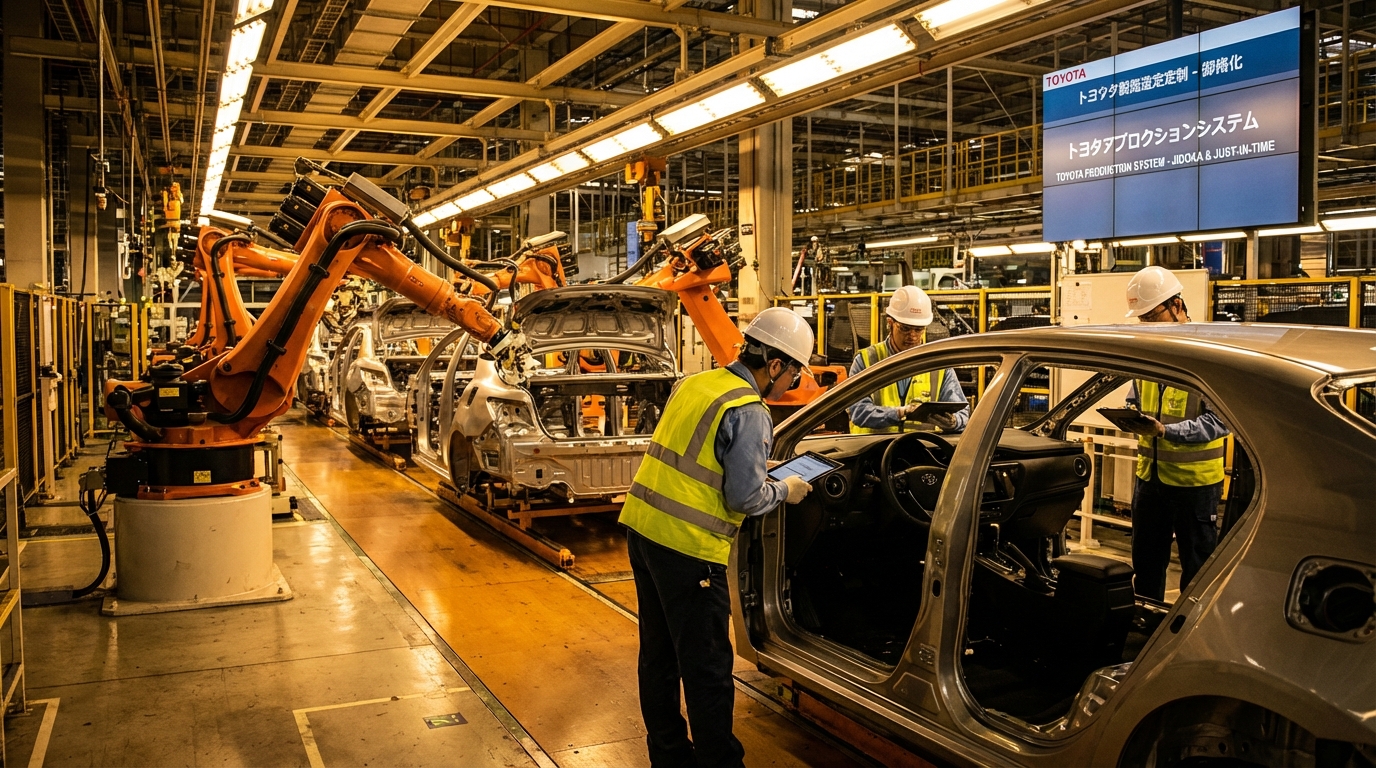
For decades, Toyota stood as the global exemplar of manufacturing excellence. The Toyota Production System (TPS), with its twin pillars of "jidoka" (automation with a human touch) and "just-in-time" production, had become required reading in business schools worldwide. Executives from Detroit to Stuttgart made pilgrimages to Toyota City to witness the system that had propelled Toyota to become the world's largest automaker by 2008, dethroning General Motors after 77 years of dominance.
The foundation of Toyota's success wasn't just operational efficiency—it was an almost religious devotion to quality and continuous improvement (kaizen). Every worker on the assembly line possessed the authority to pull the andon cord and halt production if they detected a defect. This empowerment of frontline workers, combined with a relentless focus on eliminating waste (muda), created vehicles renowned for reliability. Toyota's reputation for quality wasn't marketing hyperbole; it was earned through millions of trouble-free miles driven by satisfied customers.
But beneath this veneer of perfection, a different reality was emerging. Toyota's extraordinary growth in the 2000s—adding production capacity at a breakneck pace to satisfy global demand—had begun to strain the very system that made it great. The company had expanded from producing 5.5 million vehicles in 2000 to over 9 million by 2008. With this expansion came new suppliers, new workers, and new complexity. Some insiders worried that growth had outpaced the company's ability to maintain its legendary quality standards.
The Crisis Emerges
In August 2009, a horrifying incident made national headlines in the United States. A Lexus ES 350 carrying California Highway Patrol officer Mark Saylor and three family members accelerated uncontrollably on a San Diego freeway, reaching speeds over 120 mph before crashing and killing all four occupants. The 911 call, with passengers screaming in terror as they hurtled toward their deaths, was played repeatedly on news broadcasts, searing the crisis into public consciousness.
This wasn't the first report of unintended acceleration in Toyota vehicles. Complaints had been trickling into the National Highway Traffic Safety Administration (NHTSA) for years. But the Saylor crash transformed scattered complaints into a full-blown crisis. Suddenly, safety advocates, trial lawyers, and Congressional committees were scrutinizing every aspect of Toyota's quality systems. Media coverage intensified, with sensational reports of "runaway Toyotas" dominating the news cycle.
In November 2009, Toyota announced a massive recall affecting 4.2 million vehicles in the United States, citing floor mats that could trap accelerator pedals. But this explanation satisfied no one. More reports of unintended acceleration poured in—incidents where removing floor mats hadn't helped, where vehicles had accelerated despite drivers' desperate attempts to stop. In January 2010, Toyota announced a second recall of 2.3 million vehicles, this time citing "sticky" accelerator pedals that could become trapped in a partially depressed position.
The Recall Timeline: Crisis in Motion
The Saylor Family Tragedy
Lexus ES 350 crashes at high speed in San Diego, killing four people. The 911 call detailing their final moments goes viral, bringing unprecedented attention to unintended acceleration claims.
First Major Recall
Toyota recalls 4.2 million vehicles for floor mat entrapment issues. The company insists this will resolve all unintended acceleration problems.
Sticky Pedal Recall
Toyota announces recall of 2.3 million vehicles for sticky accelerator pedals, admitting floor mats weren't the only issue. Crisis deepens as confidence erodes.
Sales Halt
Toyota suspends sales of eight popular models while dealers install pedal fixes. Production stops at several North American plants—an unprecedented move.
Congressional Testimony
Toyota President Akio Toyoda testifies before Congress, apologizing tearfully and acknowledging the company "pursued growth over quality."
Regulatory Pressure Mounts
NHTSA investigates whether electronic throttle control systems could be at fault. Toyota maintains electronics are not the cause, but public skepticism remains high.
The Systemic Context: When Strength Becomes Weakness
What made Toyota's crisis particularly fascinating from a management perspective was the paradox at its heart: the very organizational characteristics that had driven decades of success now appeared to be hindering crisis response. The Toyota Production System emphasized stability, standardization, and incremental improvement—virtues in normal operations, but potentially liabilities in a fast-moving crisis.
Toyota's organizational structure reflected traditional Japanese corporate hierarchy: highly centralized decision-making, with critical choices flowing through Toyota City headquarters in Japan. This centralization ensured consistency and maintained quality standards across a global operation. Regional managers had limited autonomy; they implemented strategies developed in Japan rather than adapting quickly to local conditions.
The company's culture of consensus-building (nemawashi) meant that decisions required extensive consultation and buy-in before implementation. This process built organizational alignment but consumed time—a precious resource during a crisis. Moreover, Toyota's legendary reluctance to acknowledge defects publicly, born from a deep sense of shame about quality failures, meant the company's initial instinct was to minimize rather than transparently address the problem.
Organizational response characteristics - Conceptual framework based on crisis management literature