Top UI Design Trends Defining 2026
Liquid Glass & Translucent Depth
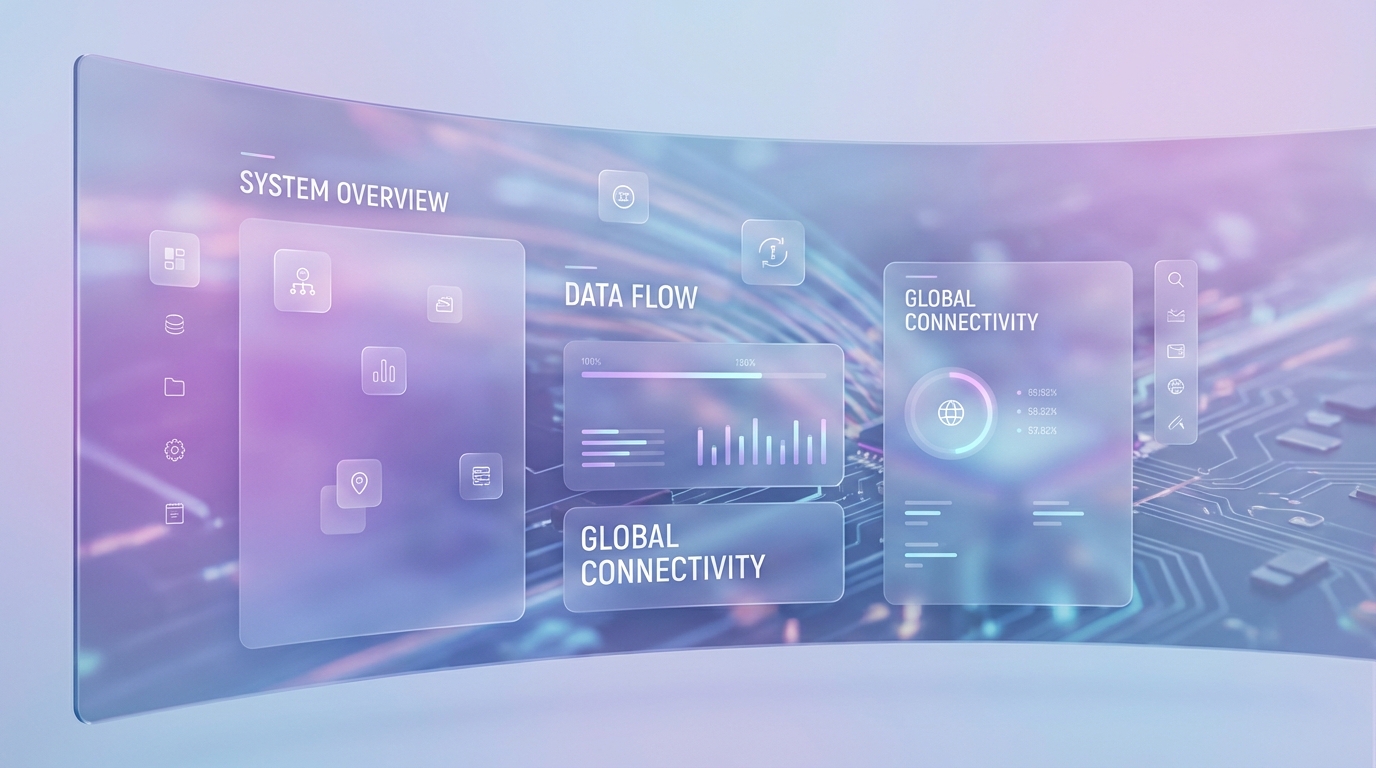
One of the latest UI trends for 2026 is "Liquid Glass," inspired by Apple's evolving design language. It reintroduces depth, translucency, and motion in a way that feels both futuristic and familiar. Surfaces appear fluid and dynamic, reflecting light and color as users move through them, with designers layering translucent elements and creating a sense of motion and atmosphere.
Glassmorphism uses transparent, layered depth with a sheen-like quality to create compositions that feel sleek and commanding—an evolved, refined, and hyper-modern interpretation of digital space. This aesthetic brings interfaces closer to the physical world, blending clarity with playfulness through frosted glass effects, backdrop filters, and subtle transparency.
AI as Design Partner: Predictive & Adaptive Interfaces
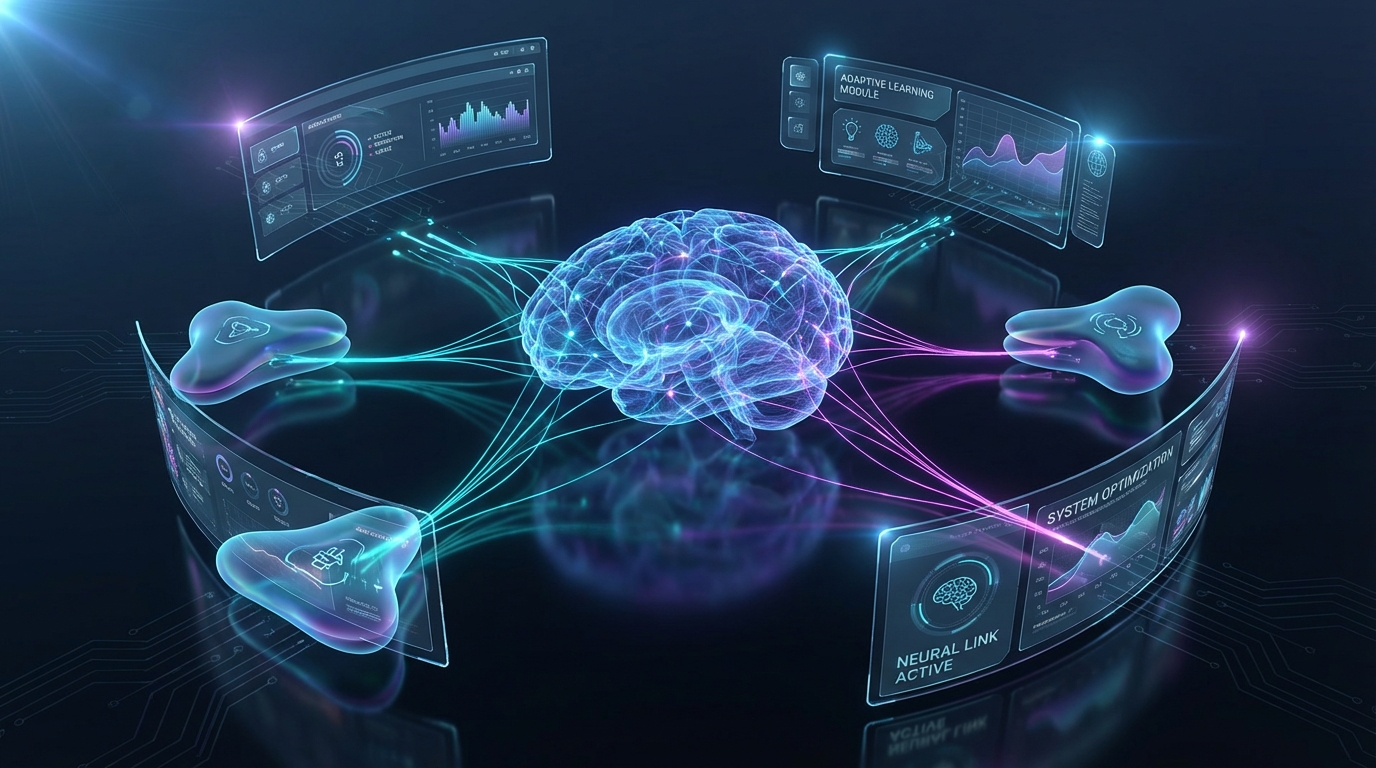
Interfaces are moving beyond simple recommendations. With the use of AI, products are learning to anticipate needs more accurately by adapting layouts, content, and notifications based on behavior, context, and habits. The goal is to make digital products feel dynamic rather than passive.
AI is transforming from a generator of content into a trusted creative partner. In 2026, AI steps into a more advanced role as a design assistant: suggesting accessibility improvements, refining typography and color palettes based on real-world data, AI layout optimization, and even powering adaptive chatbots. Netflix doesn't just recommend shows based on behavioral data but even goes as far as to customize the thumbnails each user sees.
3D & Spatial Design: Thinking Beyond Screens
By 2026, digital design is getting dimensional. Thanks to devices like Apple Vision Pro, Meta Quest, and even upcoming Samsung gadgets, designers are thinking in space, not just screens. This trend is about making interfaces feel alive.
Flat design has had its moment. Now we'll see more 3D touches: depth, shadows, floating cards, maybe even holographic effects—not VR, but enough so that UIs feel layered and alive. This includes subtle neumorphic elements, parallax scrolling effects, and spatial interfaces designed for mixed reality environments.
Kinetic Typography & Expressive Text
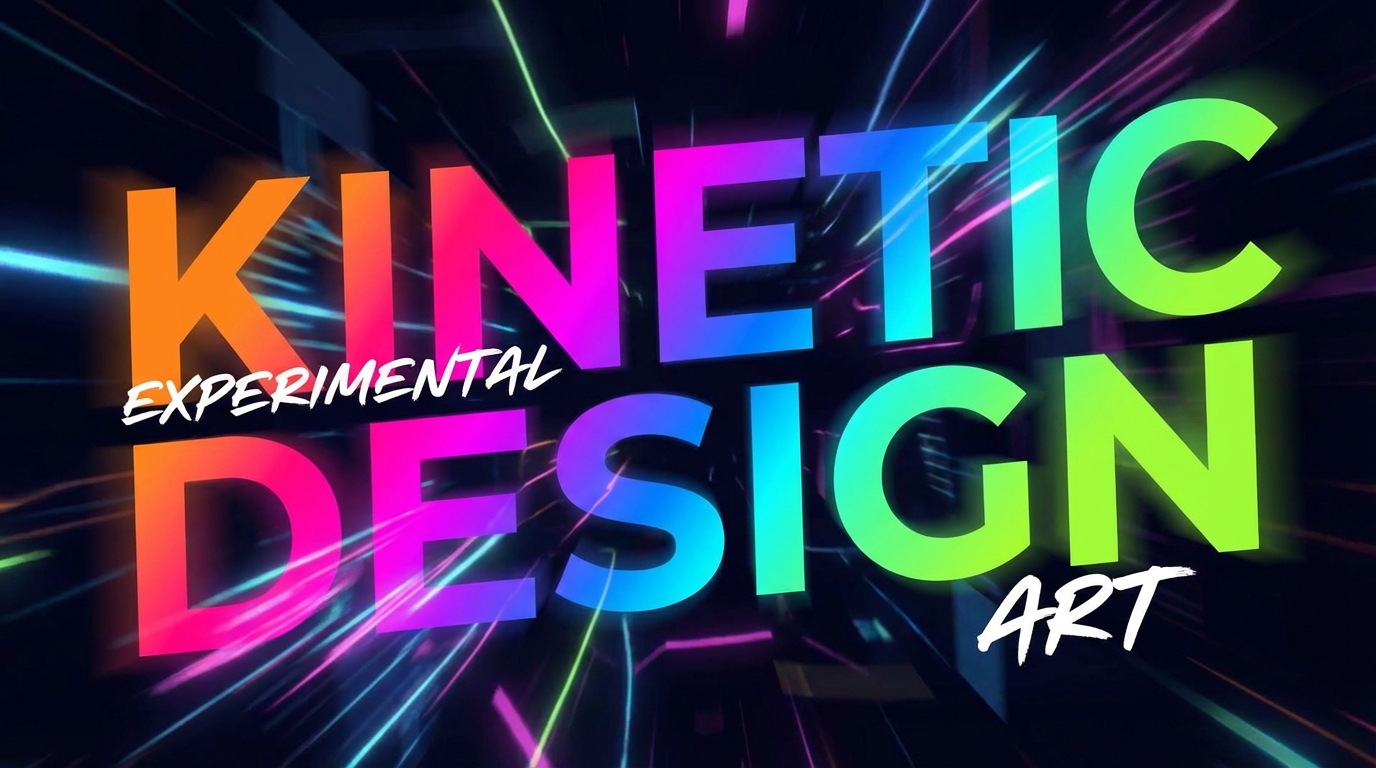
Variable fonts, animated text, and responsive kinetic type are taking over hero sections and product pages. Fonts now shift in weight, stretch, or react to scroll and sound. Typography is no longer passive—it's an active participant in storytelling and user engagement.
Large fonts have been a trend for several years, and it seems web designers are becoming more and more bold. The increasing preference for larger fonts every year is a sign that this trend will continue into 2026. Type is no longer just functional—it's huge, it's moving, it's animated. Designers are using expressive fonts as centerpieces instead of just accents.
Motion Narrative & Micro-Delight
Interfaces are starting to feel alive, reacting to user input with motion, texture, and subtle feedback. Google's latest iteration of Material Design, called Material Expressive, focuses on dynamic motion and tactile response. This evolution reflects a broader 2026 shift toward design that feels more sensory.
Motion Narrative is a kinetic approach to digital storytelling, where intentional, thoughtful movement transforms static pages into living experiences. When done well, Motion Narrative becomes the design itself. Micro-animations mature into micro delight: the subtle bounce of a button, a toggle that feels tactile, a form field that gently reacts to input.
Data Storytelling Through Scrollytelling
Data is transforming from static dashboards into interactive narratives. Animated, scroll-based storytelling ("scrollytelling") helps users understand complex information at a glance. This shift is one of the strongest UI trends 2026 will bring to enterprise and analytics products.
Some financial and analytics platforms are now using animated story flows that guide users through insights step by step, highlighting trends, comparing metrics, and visualizing change dynamically. Instead of charts, users get an experience that tells a story.
Zero-UI: Interfaces That Disappear
"Zero-UI" refers to user interfaces that rely on voice, gesture, or environmental cues instead of traditional visual elements. The trend will be toward automation, context awareness, and minimal UI when possible—auto-saving, anticipatory suggestions, voice or gesture control, fewer buttons visible.
The shift is already happening around us. Voice assistants like Alexa and Google Assistant have turned commands into conversations. Meanwhile, ChatGPT's voice mode proves that natural dialogue can replace layers of menus and buttons entirely.
Sustainable & Ethical Design
Sustainability has long been on the radar, but in 2026 it's shifting from a nice-to-have to a more formalised expectation. Digital products leave a hefty carbon footprint, and the onus will fall (largely) on designers to minimise this impact.
The W3C Web Sustainability Guidelines (WSG) are a major factor—an active community effort with updated drafts emphasizing practical steps such as data-light patterns, efficient caching strategies, and asset budgets, all of which make digital products more energy-efficient.
Accessibility as Foundation, Not Afterthought
With guidelines like the EU's WCAG 2.1, most modern UI trends prioritize accessibility from the start, making it an integral part of the design rather than an afterthought. Microsoft Teams demonstrates this approach by combining live captions, high-contrast modes, and full keyboard navigation within a polished, professional interface. It shows that inclusive design does not mean compromising on aesthetics.
Bold Color Resurgence & Natural Palettes
I would not be surprised if 2026 brings more bold gradients, expressive hues, and unapologetic saturation than we have seen in recent years. Maybe designers are finally ready to turn the volume back up. Simultaneously, there's a counter-trend toward warmth: Web design color trends for 2025 and 2026 are embracing a significant shift toward digital comfort, with designers moving toward more soothing and nurturing color palettes that create welcoming digital spaces that reduce visual fatigue.
The trend will evolve into the "nature distilled" aesthetic, featuring palettes that celebrate the muted, earthy tones of skin, wood and soil, emphasizing a subtle sophistication.