Recession Probabilities for 2026: What the Forecasts Tell Us

Expert predictions, market sentiment, and key economic indicators paint a complex picture of economic risks ahead

📊 Current Consensus: 30-42% Recession Risk

The Current Landscape: Cautiously Optimistic with Significant Caveats

As we navigate through March 2026, the economic landscape presents a paradox that has confounded even seasoned forecasters. While recession risks have moderated from their peak levels in early 2025, the probability of an economic downturn remains elevated compared to historical norms—hovering in a range that suggests we're walking a tightrope between continued expansion and contraction.

J.P. Morgan Research has reduced the probability of a U.S. and global recession occurring in 2025 from 60% to 40%, reflecting improved conditions following the de-escalation of trade tensions. However, this is still nearly three times higher than the 15% baseline probability that typically characterizes a healthy economy, according to analysts.

RSM economists have lowered their recession probability over the next 12 months to 30%, down from a previous estimate of 40%, citing expansionary fiscal policies and Federal Reserve rate cuts as supportive factors. Meanwhile, Moody's Analytics puts the risk of a 2026 recession at about 42%, with chief economist Mark Zandi noting that "I think we'll most likely get through 2026 without a downturn, but nothing else can go wrong. Like, nothing. We're pretty much on the edge."

40%
J.P. Morgan Recession Probability
Updated May 2025
30%
RSM Economist Forecast
2026 Outlook
42%
Moody's Analytics Risk Assessment
Current Estimate
32%
Polymarket Prediction
Market-based probability

Perhaps most tellingly, prediction market Polymarket shows a 32% probability of a U.S. recession by the end of 2026, reflecting real-money bets from thousands of participants. This market-based measure has proven remarkably prescient in recent years, often outperforming traditional polling and expert forecasts.

Market-Based Predictions: The Wisdom of Crowds

One of the most fascinating developments in economic forecasting has been the rise of prediction markets—platforms where participants trade contracts based on real-world outcomes. Unlike traditional forecasts that represent the views of a single analyst or institution, these markets aggregate the collective judgment of thousands of traders putting actual money behind their convictions.

Polymarket sees a 40% chance of US recession by the end of 2026, while Kalshi estimates 36%, up from earlier readings. These probabilities have fluctuated significantly in response to economic data releases, with odds on both platforms surging in recent weeks, reflecting a broad repricing of U.S. economic risk.

Why Prediction Markets Matter

Polymarket odds are set by real traders putting real money behind their beliefs, which tends to surface accurate predictions. With $512.2K traded on recession probability, these prices aggregate the collective knowledge and conviction of thousands of participants—often outperforming polls, expert forecasts, and traditional surveys. Prediction markets like Polymarket have a strong track record of accuracy, especially as events approach their resolution date.

What makes these markets particularly valuable is their real-time responsiveness to new information. While traditional forecasts may be updated quarterly or monthly, prediction market odds shift instantaneously as traders process new data—from employment reports to Federal Reserve announcements to geopolitical developments. This dynamic quality provides a continuously updating signal of market sentiment about recession risk.

The recent uptick in recession odds on these platforms coincides with several concerning developments: February 2026 nonfarm payrolls fell by 92,000, unemployment rose to 4.4%, with three job declines in five months. Additionally, the escalation of the US-Israel-Iran conflict has directly disrupted global energy supply chains, with oil prices crossing $100 a barrel for the first time in nearly four years. Rising oil prices have amplified concerns about a potential recession.

Expert Forecasts: A Range of Perspectives

Source: Various economic forecasters and financial institutions, 2025-2026

The divergence in expert opinion reflects genuine uncertainty about the economy's trajectory. While all major forecasters acknowledge elevated recession risk compared to historical baselines, their assessments vary based on different weightings of various economic factors and differing views on policy impacts.

J.P. Morgan Research
40%
May 2025
Moody's Analytics
42%
Q1 2026
RSM Economists
30%
2026 Outlook
Bloomberg Survey
30%
Recent Survey
Polymarket
32%
Real-time
Kalshi Market
36%
Real-time

Analysts Bloomberg surveyed forecast 2% gross domestic product growth and a 30% chance of recession, suggesting a scenario of continued but sluggish expansion. This represents what some economists call a "muddle-through" scenario—neither robust growth nor outright contraction, but rather an economy treading water.

While some data signals an economic slowdown may be likely, at this point a recession is not expected for the U.S. according to recent analysis. However, four key threats could derail the economy in 2026: policy-driven inflation, "stagflation lite," consumer exhaustion and a potential artificial intelligence bubble. While these "aren't necessarily recession triggers on their own, they could compound into something more serious if they collide," analysts warn.

The Federal Reserve's projections offer another data point: The Fed's upgraded 2026 GDP growth forecast is 2.3%, up from a previous estimate of 1.8%. This optimistic revision reflects confidence in the economy's resilience, though it comes with the caveat that the unemployment rate rising to 4.4% in February and core personal consumption expenditures (PCE) still sticky at a 3% pace in December present ongoing challenges.

Why Predictions Vary: The Complexity of Economic Forecasting
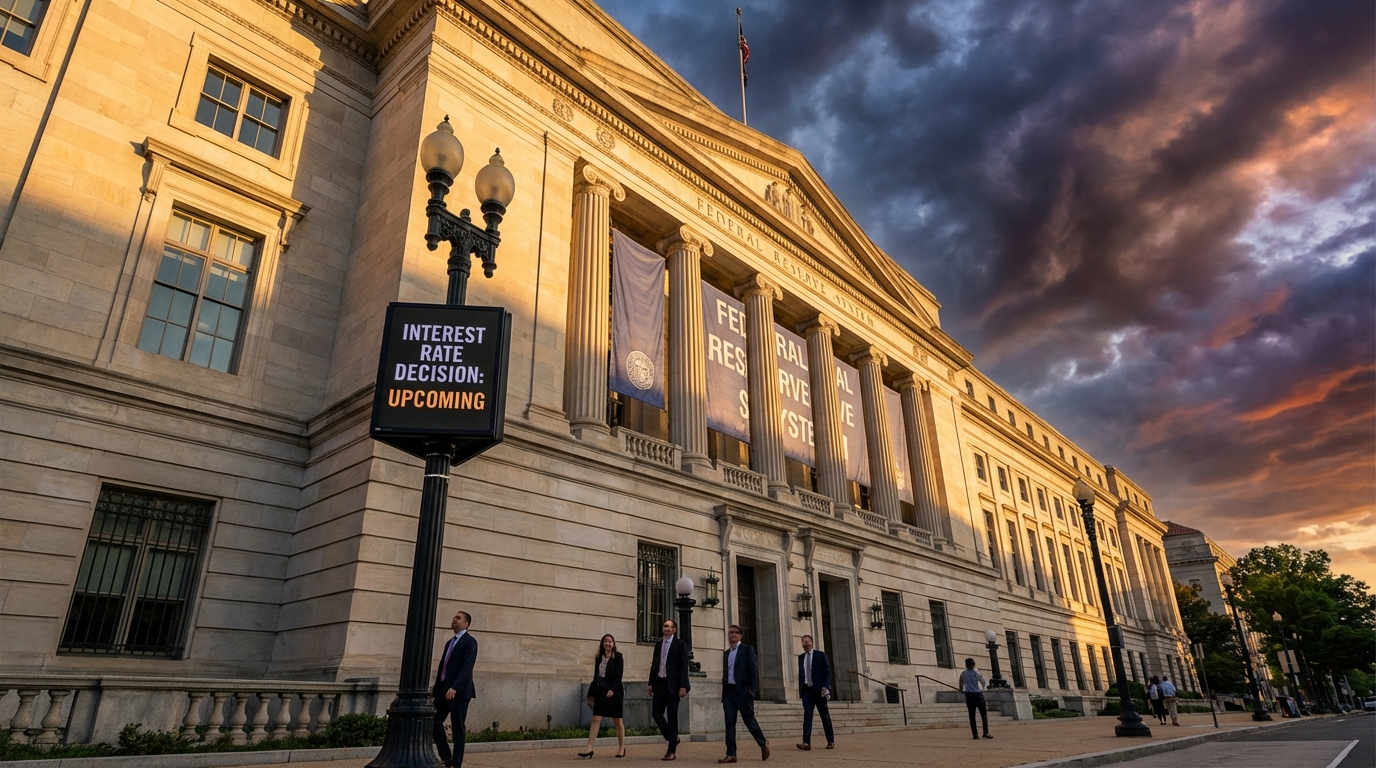
Federal Reserve building representing monetary policy decisions

The wide range in recession probabilities—from 30% to 42%—isn't simply a matter of some forecasters being more pessimistic than others. Rather, it reflects fundamental challenges in predicting economic turning points and different analytical frameworks for weighing various indicators.

Economic forecasting in 2026 faces several unique complications that make this moment particularly difficult to read. First, the traditional playbook for recession prediction has been disrupted by unprecedented monetary policy responses to the pandemic, followed by the fastest rate hiking cycle in decades. Second, structural changes in the labor market—including widespread remote work, the rise of the gig economy, and demographic shifts—mean that historical patterns may not apply as cleanly.

Third, and perhaps most significantly, policy uncertainty has reached extraordinary levels. The biggest wildcard for 2026 is government policy, specifically around trade tariffs, the national debt and more potential government shutdowns. Throughout 2025, the administration's protectionist trade agenda introduced significant volatility. After baseline and country-specific reciprocal tariffs were rolled out, the Supreme Court struck down the Trump administration's use of the International Emergency Economic Powers Act (IEEPA) for broad tariff actions. This ruling in February triggered a refund claim for companies that paid the tariffs and new legal uncertainty.

This policy volatility makes traditional econometric models less reliable, as they're calibrated on historical relationships that assume relatively stable policy environments. When the rules of the game are changing rapidly—as they have been with trade policy—forecast models struggle to adjust.

Another source of divergence is the weight different forecasters place on various economic indicators. Some emphasize the yield curve and financial market signals, which have normalized recently. Others focus more heavily on labor market indicators, which have shown concerning weakness. Still others prioritize forward-looking indicators like consumer confidence and manufacturing new orders, which paint a mixed picture.

The outlook for the economy rests on four pillars: the labor market, inflation, the consumer and artificial intelligence, according to Moody's chief economist. If any one of those falters or moves in the wrong direction, "we're toast," highlighting how interconnected risks create compound vulnerabilities.

Key Economic Indicators to Watch

Understanding recession risk requires monitoring a constellation of indicators, each providing a different window into economic health. While no single indicator offers perfect foresight, collectively they paint a picture of where the economy may be heading.

Source: Federal Reserve, BLS, Conference Board

The Labor Market: Showing Cracks

Employment data has traditionally been one of the most reliable indicators of economic health, though it tends to be coincident or slightly lagging rather than leading. Recent trends have raised concerns: According to the Bureau of Labor Statistics, nonfarm payrolls dropped by 92,000 in February. The unemployment rate rose to 4.4%. Notably, this is the third payroll decline in five months.

The Sahm Rule—a recession indicator that signals the start of a recession when the three-month moving average of unemployment rises by 0.5 percentage points or more from its low over the past 12 months—is approaching its threshold. Sahm Recession Indicator signals the start of a recession when the three-month moving average of the national unemployment rate (U3) rises by 0.50 percentage points or more relative to the minimum of the three-month averages from the previous 12 months. While not yet triggered, its proximity warrants close monitoring.

The Yield Curve: Normalized but With a Warning

The yield curve—the difference between long-term and short-term interest rates—has long been Wall Street's favorite recession predictor. The spread between the 10-year and two-year Treasury yields is a popular gauge; its inversion has preceded every U.S. recession since the 1970s, typically with a lead time of 6 to 24 months.

After remaining inverted for nearly two years—the longest stretch since 1978—the yield curve normalized in 2025. However, some economists note that recessions often begin not when the curve inverts, but when it steepens again after inversion. The curve's recent normalization, rather than providing an all-clear signal, may actually mark the transition from prediction to realization of economic weakness.

Leading Economic Index: Persistent Decline

The Conference Board Leading Economic Index® (LEI) for the US declined by 0.2% in December 2025 to 97.6 (2016=100), following a 0.3% decline in November and a downwardly revised 0.2% decline in October. Overall, the LEI fell by 1.2% over the second half of 2025. "The US LEI registered its fifth consecutive monthly decline in December, indicating continued softness in the economy in early 2026," said a Conference Board analyst.

This persistent decline in the LEI is noteworthy because indexes that combine several macroeconomic measures have historically done better than other indicators at signaling recessions (and expansions) up to one year in advance. However, the LEI's track record has been less reliable in recent years, with false positives during the 2022-2023 period.

Unemployment Rate

Rose to 4.4% in February 2026, with three monthly declines in payrolls over five months—a pattern that has historically preceded recessions.

Yield Curve

Now positive after historic inversion, but normalized curves have often preceded recession onset rather than prevented it.

Leading Economic Index

Declined for five consecutive months through December 2025, signaling economic softness ahead, though with less reliability than in past cycles.

Consumer Confidence

Mixed signals with wealthy consumers maintaining spending while lower-income households show signs of strain and reduced consumption.

Oil Prices

Crossed $100 per barrel due to Middle East tensions, historically a recession trigger when prices rise rapidly from elevated levels.

Manufacturing Output

ISM Manufacturing Index at 48.2 signals contraction, though services sector remains in expansion territory at 53.4.

Consumer Behavior: A Tale of Two Economies

Perhaps the most concerning development is the growing bifurcation in consumer behavior. Throughout 2025 consumer spending remained strong but with a troubling caveat: The wealthiest 10% of consumers now generate nearly half of all spending in the US, according to Moody's Analytics. "I think the bottom half of the economy is already in recession to some extent," said one consumer products analyst.

This bifurcation means that aggregate spending data—which still looks relatively healthy—may mask underlying weakness among the majority of households. Since consumer spending represents roughly 70% of GDP, sustained weakness among middle and lower-income consumers could eventually drag the entire economy into recession, even if affluent households continue spending.

The Policy Response: Will It Be Enough?

One critical variable that shapes recession probability is the policy response from both fiscal and monetary authorities. Their actions can either cushion the economy from downturns or, if mistimed, exacerbate weaknesses.

Federal Reserve Policy: A Delicate Balance

The Federal Open Market Committee decided to hold interest rates steady at its January policy meeting after three consecutive 25-basis-point cuts in late 2025 that put the target range at 3.5% to 3.75%. The pause reflects the Fed's concern about persistent inflation, even as employment data weakens.

Looking ahead, The Fed is not expected to start easing until December, with three sequential cuts thereafter, reaching a policy rate of 3.25–3.5% by the second quarter of 2026, according to J.P. Morgan economists. This relatively slow pace of cuts reflects the Fed's prioritization of inflation control over growth support—a choice that increases near-term recession risk but aims to preserve long-term price stability.

The Fed faces a classic dilemma: cutting rates too quickly could reignite inflation pressures that have only recently begun to moderate, but moving too slowly risks allowing labor market weakness to cascade into broader economic contraction. With inflation still running above the Fed's 2% target, policymakers have limited room to provide preemptive support.

Fiscal Policy: Expansion Amid Uncertainty

"Our base case is no recession for 2026. We think we can avoid it with the fiscal stimulus that's coming," says one chief technical analyst. Tax cuts Congress passed over the summer have the potential to boost economic activity next year by growing the spending power of everyday consumers who have been squeezed by elevated inflation. In addition, the combination of corporate tax cuts in the One Big Beautiful Bill Act and more clarity around regulatory issues will give businesses both the capital and the confidence to invest more.

However, fiscal stimulus comes with its own complications. Additional spending and tax cuts will increase the federal deficit, potentially pushing long-term interest rates higher even as the Fed cuts short-term rates. Moreover, the U.S. now looks set to take an easier fiscal policy stance than previously expected for the 2026 financial year, which could complicate the Fed's inflation-fighting efforts.

The effectiveness of fiscal policy also depends heavily on its composition and targeting. Broad-based tax cuts may primarily benefit households already in strong financial positions, doing little to support the lower-income consumers showing the most stress. Infrastructure spending and targeted support programs would likely provide more economic stabilization, but political constraints may limit such targeted approaches.

Unique Risk Factors in 2026

Beyond traditional cyclical factors, several unique risks characterize the current environment and complicate the recession outlook.

Geopolitical Tensions and Energy Prices

The resurgence of oil prices above $100 per barrel represents a significant headwind. '73-'74 recession and bear market (worst one since 1929 at the time) and the '90 recession and bear market were both caused by an accelerated rise in oil prices, providing historical precedent for how energy shocks can trigger economic contractions.

The current spike is driven by production cuts from major Middle Eastern producers, the closure of the Strait of Hormuz, and concerns about further escalation of the ongoing conflict. Unlike previous oil shocks that resulted from supply constraints or OPEC manipulation, this spike stems from active military conflict—a more unpredictable and potentially prolonged source of disruption.

Private Credit Market Stress

An often-overlooked risk factor is emerging stress in private credit markets. BlackRock has capped withdrawals in its $26 billion private credit fund. In addition, Blue Owl has halted quarterly redemptions on its Blue Owl Capital Corp II (OBDC II), instead choosing to distribute cash through periodic payments tied to asset sales. The moves come amid rising withdrawal pressures.

Private credit grew explosively in the post-2008 period as banks retreated from certain lending activities and yield-hungry investors sought alternatives to traditional bonds. This market now represents trillions in loans to companies that might struggle to refinance if economic conditions deteriorate. Liquidity problems in private credit—where assets can't be easily sold—could amplify a downturn by forcing fire sales and tightening credit conditions just when companies need access to capital most.

The AI Investment Boom: Sustainable Growth or Bubble?

The push to build the infrastructure for artificial intelligence, including a more robust energy grid, will be the primary driver of growth for at least another year, according to RSM economists. This massive investment wave in data centers, chips, and AI infrastructure has been a bright spot supporting growth.

However, a potential artificial intelligence bubble ranks among the key threats that could derail the economy. If AI investments fail to deliver expected returns or if valuations in AI-related companies correct sharply, the resulting wealth destruction and investment pullback could trigger broader economic weakness. The sustainability of AI-driven investment depends on whether productivity gains from AI materialize quickly enough to justify current spending levels.

Trade Policy Volatility

Perhaps no factor has introduced more uncertainty than trade policy. "The recent backtrack on U.S.–China tariffs has altered our thinking in two important ways. First, the size of the tariff tax hike has been scaled down, imparting less of a purchasing power squeeze. Second, the quick unilateral tariff reversal by President Trump is signaling less tolerance for 'short-term pain, long-term gain.' As a result, we no longer see a U.S. recession, but expect material headwinds to keep growth weak through the rest of this year."

The Supreme Court's striking down of broad tariff actions using IEEPA has created additional uncertainty, with refund claims and legal disputes ongoing. This uncertainty makes business planning difficult and could lead to reduced investment even if actual tariff levels moderate.

What History Teaches Us About Recession Prediction

A sobering reality of economic forecasting is its limited track record. Even though economists use a large set of variables to forecast the future behavior of economic activity, none has proved a reliable predictor of whether a recession is going to take place. Changes in some variables—such as asset prices, the unemployment rate, certain interest rates, and consumer confidence—appear to be useful in predicting recessions, but economists still fall short of accurately forecasting a significant fraction of recessions, let alone predicting their severity in terms of duration and amplitude.

This humility about forecasting limitations is essential context for interpreting current recession probabilities. A 40% recession probability doesn't mean forecasters are confident about what will happen—it means they genuinely don't know, with the odds only slightly favoring continued expansion over contraction.

Historical analysis reveals that recession prediction faces several fundamental challenges. First, recessions are rare events—There were 122 completed recessions in 21 advanced economies over the 1960–2007 period—meaning that statistical models have limited data to learn from. Second, each recession has somewhat unique causes, making pattern recognition difficult. The 2008 financial crisis looked nothing like the 2001 tech bust, which bore little resemblance to the 1990-91 recession triggered by oil prices and Fed tightening.

Third, and most problematically, many recession indicators are self-referential: they work until everyone starts watching them, at which point policy responses or market reactions may prevent the predicted recession from occurring. This creates a kind of economic uncertainty principle—the act of predicting and preparing for a recession changes the probability of it actually happening.

The Track Record of Leading Indicators

A new index showing the share of leading indicators predicting a recession at any given time significantly outperforms existing measures at signaling a recession six to nine months in advance, according to Chicago Fed research. However, even the best indicators provide uncertain signals, with lead times varying significantly and false positives occurring regularly. The yield curve, for instance, inverted for nearly two years without triggering a recession—an unprecedented situation that has led some to question whether this indicator still works in an era of massive central bank balance sheets and quantitative easing.

The lesson from this historical perspective is that recession probabilities should be interpreted as ranges of uncertainty rather than precise forecasts. When forecasters say there's a 35% chance of recession, they're essentially saying the economy could plausibly go either way, with the balance of evidence slightly favoring continued expansion. Small changes in policy, consumer behavior, or external shocks could tip the outcome in either direction.

Preparing for Multiple Scenarios

Given the genuine uncertainty about whether a recession will materialize in 2026, the most prudent approach for both individuals and businesses is scenario planning—preparing for multiple possible futures rather than betting on a single outcome.

For Individuals and Households

Personal financial resilience matters most during economic uncertainty. Building or maintaining an emergency fund covering 3-6 months of expenses provides a buffer against job loss or income reduction. For those with variable income or who work in cyclically sensitive industries, erring toward the higher end of that range makes sense given current elevated recession risk.

Cash may not be the most exciting play, but it reduces market risk and provides financial flexibility if a recession creates potential buying opportunities in 2026. You might use this opportunity to rebalance your portfolio, trimming high growth areas to buy more attractive valuations. Focusing on income-generating investments like government-backed securities and investment-grade corporate debt, alongside global investments, commodities and alternatives can provide stability.

Job security also warrants attention. Updating skills, maintaining professional networks, and understanding your value proposition to employers becomes more important when labor markets weaken. Those considering job changes might want to prioritize stability over marginal salary gains in an uncertain environment.

For Businesses

Companies face particularly complex planning challenges. Pulling back too aggressively on investment and hiring risks missing growth opportunities if recession is avoided, but maintaining an expansionary stance leaves firms exposed if contraction materializes.

Operational flexibility becomes paramount. This might mean maintaining stronger cash positions than usual, favoring shorter-term contracts with suppliers and customers, and ensuring credit lines are established before they're needed. Workforce planning should balance retention of key talent with the ability to adjust if demand weakens significantly.

Scenario planning exercises—modeling financial performance under different GDP growth assumptions—help leadership teams prepare responses in advance rather than scrambling during a crisis. Companies that weathered 2008-2009 and 2020 most successfully tended to be those that had thought through various possibilities before they unfolded.

For Investors

"The stock market usually drops months before a recession starts and begins its recovery well before a recession ends. The worst move is often sitting on the sidelines, as the biggest market gains typically occur while the economic news is still terrible."

This timing reality makes pure recession prediction a poor basis for investment decisions. Even perfect foreknowledge of a recession wouldn't necessarily tell you when to sell or buy. Instead, diversification across asset classes, geographies, and strategies provides more reliable risk management than attempts to time the cycle.

Some analysts encourage investors to remain invested but focus on diversifying equities and adding HALO companies—hard assets, low obsolescence, companies with physical assets or products that can't be replaced by AI. Those include infrastructure and energy stocks. Defensive sectors like utilities, consumer staples, and healthcare have historically outperformed during recessions, though rotating entirely into these sectors means sacrificing upside if strong growth continues.

The Bottom Line: Elevated Risk But Not Inevitability

As we move through 2026, the economic picture remains genuinely uncertain, with recession probabilities elevated but expansion remaining more likely than contraction in most forecasts. The consensus among professional forecasters places recession risk in the 30-42% range—high enough to warrant serious preparation, but low enough that betting heavily on recession would be imprudent.

Several factors support continued expansion: fiscal stimulus from tax cuts, eventual Fed rate cuts as inflation moderates, AI-driven investment, and recent de-escalation of trade tensions. Signs point to no; as long as the fundamentals hold and investors keep their heads, the odds will likely play in our favor for another year, suggests Bloomberg's analysis.

Yet significant risks loom. Labor market deterioration has accelerated, with three months of payroll declines in five months—a pattern that has historically preceded recessions. Energy price spikes from geopolitical conflict, stress in private credit markets, bifurcated consumer spending with lower-income households already in recession-like conditions, and ongoing policy uncertainty all create vulnerabilities.

Perhaps most importantly, "I think we'll most likely get through 2026 without a downturn, but nothing else can go wrong. Like, nothing. We're pretty much on the edge," as Moody's chief economist put it. This fragility means that while the base case is continued expansion, the margin for error is thin. Any additional shocks—whether from geopolitical events, financial market stress, policy mistakes, or unexpected inflation resurgence—could tip the economy into contraction.

The appropriate response to this uncertainty isn't panic or paralysis, but rather prudent preparation for multiple scenarios. Building financial resilience, maintaining flexibility, diversifying exposures, and avoiding over-commitment to any single view of the future positions both individuals and organizations to weather whatever economic conditions emerge.

As we've learned from past cycles, economic turning points are easier to identify in retrospect than in real-time. The data available today gives us probabilistic guidance, not certainty. By understanding both the risks and the factors supporting continued expansion, we can make informed decisions while remaining prepared to adapt as 2026 unfolds.